Thursday, July 02, 2009

Rosters: Managing the list

This summer, I've been organizing pickup hoops at my university's gym. I'd heard that the pickup scene is usually pretty dead during the summer, so I spent the spring collecting e-mail addresses from the regular players and compiling them into a list. It's been great so far. I've got more than 40 players on the list and we get 15-20 out there every time I send out a basketball alert.

Overall, I like administering the list because I can virtually guarantee that any time I want to play, there will be others to play with. I also like the fact that I have some control over who gets on the list, and more importantly, who is excluded from it. Now don't get me wrong
this isn't some velvet rope thing, and it certainly isn't as exclusive as this basketball list. I invited almost all the regular players at the gym. However, I was also able to subtly exclude a few bad apples by intentionally failing to mention the list when they were around.

But now the list has grown beyond my control. People talk about it during our pickup runs and I am getting quite a few referrals via e-mail and in person. In principle, I have no problem with this, but the existence of the list is so well-known at this point that it can no longer be hidden from those that I wanted to hide it from.

This guy, for example, is one of the biggest doofuses in the gym and I had taken great pains to keep him out of the loop. But the other day I was running in a game and I heard him yell to me from the sideline, "How come I didn't get on the e-mail list?" Others must have been talking about it. I was overcome with two distinct negative emotions. I felt guilty for excluding him and I also felt annoyed that he was acting so entitled about getting on the list. Ultimately I had no choice but to add him and now he's coming almost every time (and acting like a fool).

On the one hand, I feel like a jerk for applying my own standards of play and personality to list membership, even if those standards are fairly lax. Isn't this the sort of anti-democratic elitism that we want to eliminate from our society? Haven't we all felt bad for being excluded from something? On the other hand, some dudes are meatheads and need to stop playing competitive sports with reasonable people. Moreover, I am constrained by my position at the university. If I were a student, I could probably be more of a hardass about restricting inclusion on the list. But as a professor (and the only one who plays pickup ball), I feel a duty to act charitably and promote harmony in the university hoops community.

I feel that this issue reflects a fundamental dilemma in the democratic process. In theory, democracy is a good thing because it is inclusive and fair. But at the same time, democracy is messy and inefficient because all voices demand to be heard. (In this case, all players demand court time.) Even America's founding fathers designed our wacko electoral system to limit the irrational and uninformed influence of the masses. Why shouldn't I be able to limit the influence of mean, unsportsmanlike players?

Friday, March 06, 2009

"Worse than he thinks": Self-image versus ability

I recently wrote about appearance versus abilityspecifically, about players who are "better than they look" and those who are "worse than they look." Another important issue, and one that is a source of endless frustration to thinking ballers everywhere, is self-image versus ability. To me, the worst players to run with (aside from the belligerent and insane) are those with drastically inflated self-images. You know these players. They're the ones who think that they're the best on the court, the ones who think they know how the game should be played and how you should be playing it.

There are a lot of things to despise about these types. They often tend to ballhog. They "coach" a lot, telling others what to do and where to go. The construct completely distorted histories of games and their roles in those games, rarely blaming themselves for losses but almost always overstating their contributions to victories. But what I hate most about these players is that there is nothing you can do to make them understand the lunacy of their perceptions. There is no such thing as constructive criticism. In fact, there is no place for criticism at all, unless they are criticizing you. After playing with a worse-than-he-thinks player, one is invariably frustrated. You know, and others know, that worse-than-he-thinks is indeed, worse than he thinks, but there is nothing you can do to make him grasp that. Ignorance might be bliss for him, but certainly not for us.

In my experience, worse-than-they-think players tend to overfocus on their good skills and ignore their weaknesses. Such a player might be a good jumpshooter, and ramble on incessently about this shooting prowess, but never acknowledge that he fails to effectively rebound, defend or pass. When his ballhogging costs his team the game, worse-than-he-thinks will chastise his teammates for failing to hit shots, rebound, defend or pass. Argh.

There is an older guy in my current run that is the epitome of this type. I really don't like him, nor do the other thinking players at the gym. Last night, he was on a very good team and spent a lot of time puffing his chest out and acting like he was the king of the court. The truth was that his teammates were carrying the load and all he was doing was yapping like a miniature dog. When my team played his team, I was forced to guard a strong, highly skilled player. On one play, worse-than-he-thinks set a screen for my man, who hit a long, contested three (I managed to get over, but a little too late, and my man hit a good shot.) Coming back down the court, worse-than-he-thinks sidled up next to me and exclaimed, "THAT WAS A BIG PICK RIGHT THERE," as if he was the one who deserved credit for the shot. I wanted to smack him in the mouth.

Here again, the words of Obama brother-in-law Craig Robinson echo in my mind:
"You can tell a lot about a guy by the way he plays basketball. You can tell if a guy is selfish. You can tell if a guy is phony. There's a lot of different ways on the court you can tell that." My view is that the on-court personality issues of worse-than-they-think players seem to be exhibited off the court as well. Whenever I encounter one of these self-absorbed douchebags in real life, they turn out to be, well, self-absorbed douchebags.

Any advice on dealing with these types?
Friday, February 27, 2009

"That guy is better than he looks": Appearance vs. ability

Here's a topic I think about all the time: What factors most affect opinions about players' skills, and by what process do those opinions change? In pickup basketball, there are often unknown players rotating into the playing roster. For purposes of team selection, shot distribution and defensive assignment, other players must evaluate them quickly and make uninformed assessments about their prospective abilities. It's like speed dating.
In my view, the following characteristics carry the most weight in these initial evaluations:

Height: The taller the better.

Fitness/build: Overall, the fitter the better. Moreover, players who have a "basketball build" (lean and athletic) also experience an initial status upgrade.

Age: The age-status curve is shaped like a bell. Players who appear to be in their early 20s to early 30s have the highest status, as they are believed to be mature enough to have absorbed necessary knowledge of the game, but young enough to still run and jump effectively. The very young and the very old have the lowest status.

Race: In general, black players get the most credit. Asian players get the least credit (believe me on this one).

Attire: This is complicated and multifaceted. Length of shorts is key. Tightness of shirt and style of sneaker are also important factors. Players who wear NBA jerseys, or worse, full NBA uniforms, lose credit. Players who wear the jerseys of teams that they appear to have actually played on get a lot of credit.

Language: Players who speak competently about basketball (e.g., "screen and roll," "going left") will get credit. Those who obviously lack hoops vocabulary will lose credit.

Certainly there are others, but these, in my opinion, seem to be the main criteria by which new players are judged. However, what's even more interesting to me is the process by which players rise and fall in status as their actual abilities become known. Specifically, I think that initial status characteristics are integrally related to status mobility. Here, I propose two interrelated hypotheses:

H1. Players who look like they'll be really good, but who turn out to be average or bad, lose status much more quickly than players who look like they'll be bad and actually turn out to be bad (the "worse than he looks" hypothesis).

H2. Players who look like they'll be average or bad, but who turn out to be good, gain status much more quickly than players who look like they'll be good and actually turn out to be good (the "better than he looks" hypothesis).

Evidence for these propositions can be found in almost any pickup game. I feel like players who "look the part" but don't have the skills to match are severely denigrated (e.g., "waste of height"). Conversely, players who look ordinary but who exhibit great skill come to be held in extremely high regard. My favorite example of this was one of my hoops mentors in college. Pete was this tiny Vietnamese guyliterally 5 feet tallbut he was lightning fast, passed like Stockton, and had insane handles and deeeeep range. He would also pick your pocket if you stopped paying attention for any amount of time. Guys were always underestimating him and getting their asses busted. I was guilty of this as well. The first time I guarded him during my freshman year, he got the ball on the perimeter and pump faked. I went up thinking I was going to swat his shit into oblivion, but found myself way up in the air as he ran through my legs and laid the ball in. (Spectators and other players, of course, went crazy.) Then, because I was scared to bite on any more shot fakes, he proceeded to hit about 500 threes in my eye over the course of the night. Over the years, I saw Pete victimize countless suckers like this, and he was considered a legend in our college gymthe prototypical "better than he looks" baller.

Monday, November 24, 2008

Setshot in the Chicago Tribune!

Well, we've finally made the big time. Setshot was interviewed by the Chicago Tribune about the significance of Barack Obama's love of pickup basketball. We are described as a "slightly tongue-in-cheek blog."

The article can be found here.

Tuesday, October 28, 2008

Careers: A 73 year-old college basketball player!

I've just come across this amazing story about a guy returning to play junior college ball at the age of 73. Previously, Setshot has reported on a 52 year-old college player and a 50 year-old WNBA player, but this guy's story seems patently absurd. Ken Mink last played organized college basketball in 1956. Now a semi-retired journalist, he's somehow made the team at Roane State Community College in Tennessee.

There is video of Mink practicing with the team here and here. While the whole thing seems kinda gimmicky, and it's clear from the video that Mink is not really on the same level as his juco teammates, you've got to admire the guy's moxie. The Roane State coach says he hopes to get Mink some minutes during garbage time in blowouts. Setshot will be eagerly awaiting those YouTube clips.

A fantastic quote from the coach: "Our weakness last year was experience; I think I've taken care of that.''

The best part of the video is near the end, when Mink's teammates ask him to come to a party. The coach discourages it because, he claims, Mink will need to stay in top condition to continue practicing and playing. And then Mink calls his wife to ask if he can go, and she says no.
In response, the coach praises Mink's "support system at home." I love that:

a. He is asked to go to the party.
b. He wants to go to the party.
c. His coach does not want him to go to the party.
d. His wife does not want him to go to the party.
e. He apparently needs a "support system" to keep him from making reckless decisions.


**UPDATE 11/4/08: Mink scored 2 points in his first game! Video here.**

Friday, September 26, 2008

Race: Losing anonymity

One strange and unexpected aspect of my new hoops-life here in Denver is that I have lost a significant degree of racial anonymity. Having played in NYC and the SF Bay Area for the last decade, I'd become accustomed to being one of many Asians on the local basketball circuit. Here, however, I am one of only a few, and as a consequence, I'm identified and remembered much more quickly than I'm used to.

I'm not sure if I like it or not. On the one hand, I have been able to more effectively develop a rep in my regular game because people remember me as The Talky Asian Guy Who Plays Ball Here. On the other, I have noticed that defenders are better able to get in tune with my moves. That is, because I am more memorable, they learn my tendencies and tricks a lot faster, which is a pain in the ass for an aging baller who's losing a step.

In certain ways, this reminds me of my playing days as a teenager in upstate New York. Back then, most Asian kids didn't play ball and I was viewed as a comical aberration. In fact, the guys in my local game simply called me "Chino," which was totally racist, but I liked it because it made me feel like I belonged. Even in NYC, when I played on a court with mostly Hispanic guys in the days before Yao Ming and the emergence of global hoops, the other players called me "Ichiro" (as in the baseball player) because he was the only Asian athlete they knew of. I liked that too.

But now I'm old and not looking to be the belle of the ball anymore. I just want to play, have a good time, and work off the three donuts I ate for lunch. Anonymity has become more important to me and yet I've found myself in a place where I can't have it.
I'm considering playing in whiteface.

Sunday, August 31, 2008

Politics: McCain panders to aging ballers

John McCain's choice of Alaska governor Sarah Palin as his running mate has the media clamoring to paint the selection as a political ploy to win over disaffected female voters and appease the Republican party's conservative base.

Setshot knows better. Palin (number 22 in the photo) was actually chosen to draw the politically powerful aging baller community to the GOP in November's election.

Democratic candidate Barack Obama is well known for his love of pickup hoops, even at his advanced age (47). YouTube is filled with clips of Obama balling on the campaign trail. (Check out this excellent mixtape.) Clearly, Senator Obama has the skills to
pay lower the bills.

But what about Governor Palin? Apparently, "Sarah Barracuda" (her high school hoops nickname) played point guard on a state championship squad from Wasilla, Alaska, but there is scant evidence that she plays anymore.

Nice try McCain, but the aging baller community is too savvy for that. Despite our temptation to support a cute former high school basketball star, we're going to stick with our man Barack, who continues to find time to play the game, and has even proposed building a court in the White House.

As always, Senator McCain, the ball doesn't lie.

Friday, August 08, 2008

Careers: Being old and new, part 2


Things are coming together basketball-wise here in Denver. I've found a pretty good Sunday afternoon run and I've also started to play a little at my new school's gym. The games there are good exercise and fairly fun, but they've definitely highlighted the fact that I am significantly older than most players on a college pickup court. Luckily, I look young and can pass for a student-type, but as we have said many times on this blog: it's not how old you look, it's how old you feel.

Yesterday I was at the school gym shooting free throws by myself when what appeared to be the entire women's basketball team rolled in. I wasn't sure what to do, so I asked one of the players if they were practicing. She said that they were just playing pickup and that I was welcome to join in. I ran with them for a couple of games, but pretty much stayed out of the way and kept quiet. The players were really nice, but I felt like I was intruding and I absolutely did not want to be the doofus who tried too hard to impress all the ladies. After a while, some regular joes
—mostly college-agedstarted to play on the next court over. I told the women I was chatting with on the sidelines that I was going to "go play with the civilians" and one of them replied "yes, you should." Very subtle.

Eventually, the civilian game got enough players for full court and we started to run. It was a decent game and I was one of the better players on the court, so feeling outclassed or out of place were not issues. But during (and between) games I noticed that the other players seemed to be taking the outcomes very seriously
—often criticizing teammates for defensive lapses and poor shot selection. Losing players seemed to be genuinely upset as they sat and waited for next game.

Now that I'm an older player, it's easy for me to forget how important everything seems to younger guys, and how, so often, basketball outcomes stand in for their larger senses of self worth. I've played so much pickup ball in my life that every outcome
—from the most devastating loss to the most unlikely victory—has happened to me a million times. Don't get me wrong, I'm competitive and I always play to win, but the disappointment of getting smushed on the court does not linger emotionally for me any more. I know that there will always be another game, and that all wins and losses eventually fade into obscurity. To me, what matters the most is one's reputation as a competitor and a sportsman.

After games, I would go and shake hands with every person on the other team, telling them that they played well (whether they had or not) and that the game was a lot of fun (whether it was or not). Many of the young guys actually seemed surprised by this
—like you're not supposed to commiserate with the enemy or something, and that "fun" is not really what pickup ball is about. It reminded me of how much my perspective on recreational hoops has changed over the years, and that for younger guys, victory and personal performance seem far more important than camaraderie and sportsmanship.

So while I will continue to play at the school gym because it is close and convenient, I'd like to find a group of older players to run with. I may look young, but man, I feel old.

Thursday, July 31, 2008

Careers: Being old and new

I've just moved to Denver from the Bay Area. In a lot of ways, the move is great: great new job, great new apartment, great new city. What's not great is that I have to find new places to play basketball. I've moved a lot in my life, and each time, I've had to find good pickup games in unfamiliar places. It's always tough, and even tougher now that I'm old and crabby. As a younger guy, I'd play in any game I could find, but now I'm much more picky about quality of play, and more importantly, level of sportsmanship. Plus, I have to reestablish myself in new socio-hoops environments, which can be stressful.

I've been in Denver about two weeks now and I still haven't found a decent game. One reason for this is that it's incredibly hot
like record-breakingly hotso no one is playing outdoors.

Yesterday I went to a rec center near my apartment and found a few guys shooting around. We all shot for a while and then made an awkward transition to two-on-two. The game was pretty good. My teammate, incredibly, had played basketball for my alma mater. He was a terrific player with a deadeye jumper and seriously polished moves around the rim.
Our opponents were also quality players. One was a high-school kid who claimed that he almost broke the state record for three-pointers. I'm not sure I believe that, but he was indeed a very good shooter.

We won a couple of games
—mostly because my teammate was unstoppable. I played pretty well, repeatedly posting the high school kid up and tossing in various old man shots (he hated it and was despondent about being "shitted on"), but after two games I was done. The altitude just destroyed me! Each game was to fifteen, and by eight I was begging for the end. By fifteen I was clutching my shorts, gasping and unable to speak. I should have expected this, as I've routinely been running out of breath while performing strenuous tasks like climbing stairs, walking to the store, and petting my cat.

So now I'm facing a sorta-Catch-22. I want to find some full court games to play in, but I'm not sure I'll be able to keep up because of my sea-level conditioning. However, the only way I'll get into mile-high shape is to play in said full court games. And the whole dilemma is irrelevant if I can't find any games to actually play in.

I'll keep you posted on the Denver Old Man Pickup Hoops Scene, and if anybody out there knows of good runs in the 303/720, please let me know.

Friday, July 25, 2008

Women's basketball star returns to action—at 50!

Our friend and fellow aging baller Ali directed us to this story about women's basketball legend Nancy Lieberman being signed to a seven-day contract with the WNBA's Detroit Shock. Liebermanwho has already been inducted into the Basketball Hall of Fame (in 1996!)returns to play at the ripe old age of 50. In her "first" game with Detroit, Lieberman recorded zero points, two assists and two turnovers in nine minutes of action.

Wow! While Setshot has previously drooled over expressed admiration for Iowa's "Granny Basketball League," Lieberman has taken old lady hoops to the next level. Whether you care about women's basketball or not, this story is an inspiration.

Monday, May 19, 2008

Tips: Kareem 's advice to players over 40

Kareem Abdul-Jabbar writes a cool blog for the LA Times that reports "the insights of the NBA's all-time leading scorer."

Recently, I was directed to this entry, in which he gives some solid advice to ballers
over-40 who want to keep runnin' with the young-uns. In so doing, Abdul-Jabbar touches on issues that have become Setshot staples: lack of respect, diminishing abilities, and increased injury risk, to cite a few. I'd recommend reading his post, which is pretty brief, but if you need further brevity, here's a summary of Kareem's advice:

1. Lift weights.
2. Stay in shape and keep your cardio conditioning up.
3. Specialize more in your play.

By the way, that's a vintage photo of Kareem giving me basketball advice in the 1970s. He was demonstrating a technique called "Kermit Washington style."

Monday, April 28, 2008

Relationships: The poisonous player


Have you ever played in a game in which there was one person who just ruined it for everyone else? In my favorite weekly pickup game, there is a guy who comes semi-regularly and poisons the whole atmosphere. Old School and Hops both play in this game, and they will agree that this guy (I'll call him "the Idiot") is a serious problem.

The Idiot is actually a good player. He is in great shape, works hard on both ends of the floor, and has a versatile game. Unfortunately, he is also psycho-competitive and talks constant trash. Now, I'm not opposed to a little trash talk, but the Idiot takes it way too far. His banter is not at all playful and he invariably upsets someone to the point of fighting (usually verbal, but it has escalated beyond that). He also likes to denounce his opponent after his team wins
in my opinion, a form of unbelievably poor sportsmanship. I'm the type of guy that normally recoils from conflict, but a couple months ago I got into a screaming fight with the Idiot because he was being such a jerk to one of my teammates that I couldn't hold my tongue any longer. In fact, the Idiot pretty much gets into a fight with one or more players every single time he plays. (If you're wondering if I'm doing any racial coding here, it should be noted that the Idiot is white.)

I think that the crux of the problem is that the Idiot's style is totally out of sync with the culture of the game. His never-ending belligerence shuts everyone down emotionally and saps all the fun out of playing. I've played in games where this kind of behavior would be slightly more appropriate, but the game I'm talking about is a "nice guys" game. The same people
come out every week. We all know each other and for the most part, genuinely like each other. The games are very competitive, but the governing code of the court is to be considerate, friendly, and a good sport in both victory and defeat. Trash talking is kept to a minimum, and when it's done, it's without malice. That's why the Idiot stands out so much. His poisonous attitude is just a total wrench in the works. Last week, to the shock of many, one of the nicest players in the game lost his temper and yelled at the Idiot: "This game is normally so much funexcept when you're here!" The rest of us were thinking the exact same thing.

The basketball court is one of the few venues in polite society where strangers can come together and compete in a casual way. Everyone has a right to show up and play, but when games develop a regular cast, as ours has, there is a tendency to want to exert control over the playing roster. However, there is no easy way to exclude someone like the Idiot from participating. We hoop in a public park and abide by the rule that if you show up and call next, you play next.

So Setshotters, what can we do? Is there any way to discourage him from playing? And when he does show up, how can we minimize the effects of his poisonous personality?

Wednesday, April 16, 2008

Strategy: Psychological tactics for aging ballers

As I've gotten older and more injured, my game has evolved to compensate for reduced mobility and ever-slowing reaction times. Previous Setshot posts have discussed scouting, ball tricks and other strategies for remaining effective as an aging baller, but lately I've been thinking about different psychological ploys that can be used to deceive, demoralize or intimidate opponents. As a smaller player, I've always utilized these approaches to an extent, but in recent years I've had to rely on them even more, and I've found a few that work very well for me.

I think of many of these psychological strategies as "precedent setting." That is, they are things that I do early in games to establish a pattern that my opponent believes will continue. Later in games I may abandon them, especially if they have already accomplished the desired result.

For example:

1. I run harder when I sense my man is winded. Early on in games, especially the first game of the day, I often run out of air, only to regain it when my lungs adjust and I get a second wind. When I think my opponent is on his "first wind," I make it a point to run my ass off for a few plays, even if it kills me. I also do a lot of curling around screens because my man will have to expend energy to get over and catch me. The payoff can be great, as players will make defensive adjustments to my sprintingsuch as giving me more space and switching more often on screens. I won't (can't) run this hard for the whole game, but my defender doesn't necessarily know that. One of the most common things I hear opponents say about me to their teammates is "he runs a lot." This is sort of true, but it's partially due to advertising.

2. Early in games, I box out hard on every play if my man is bigger than me. I don't want to deal with bigger opponents in the paint. I'd rather compete on the perimeter, where I'm more likely to have an advantage. So what I do is set a precedent by boxing out aggressively at the start of games. Again, I won't necessarily do this for the whole game, but I find that most pickup players don't really like to deal with this level of effort, and at the end of games, I almost always find myself guarding on the perimeter, no matter how big my man is.

3. I talk to imaginary teammates. What I'll do is call for a screen that isn't really there, pointing to a spot on the floor and yelling "Screen! Screen here!" to the empty air. To make it even more convincing, I open my eyes as wide as I can and nod, just like I would if I were really asking for a screen. If I sense that my defender has shifted in anticipation of the screen, I'll drive the other way, having been given a few extra inches of space. A similar trick is to yell "Post up!" to an imaginary teammate (or even a real one), hoping that my defender will drop off to guard the entry pass and give me space for a jumper. I did this last week, sticking a 15-footer as my young opponent fell back to double our center. As we were running back up court, my defender rolled his eyes, extended both his middle fingers and screamed "Yo f*ck you Jeff!" I loved it.

4. If my defender is watching me instead of the ball, I follow a nonexistent shot with my eyes. Try it. Just make your eyes and head do a parabola
like you're watching a jumper in flightand see how often your defender will turn to look for it. (Make sure no one is dribbling at the time. The sound gives the trick away.) It's a great opportunity to run away from your man, and after you do it a couple of times, he'll start to get confused about when your eyes are lying and when they're telling the truth. He may even lose out on rebounds because he'll keep looking at you when a shot is actually in the air. More importantly, it will annoy him.

A related tactic I use is looking at the floor and acting nonchalant when a long pass is coming to me. My defender will be relaxed because it doesn't seem like anything is going on, but I'll suddenly wind up with the ball in my hands, racing towards the basket. I learned this one from John McPhee's book, A Sense of Where You Are, about Bill Bradley's playing days at Princeton. Bradley was reported to have outrageous peripheral vision (he could look at the floor and see the ceiling), and he did these kinds of tricks all the time.

5. I pass early and shoot late. Early in games, I try to play "true point," focusing on ball distribution and offensive flow. I'll be aggressive, but I'll mainly drive with the intention of dishing. On the perimeter, I'll mostly look to reverse the ball to the weak side, trying to make the defense to rotate and adjust. What I want to do here is make the defense forget about me as a shooting threat. Later in the game, however, I'll ramp up my shooting because I'm usually getting more space from my defender. I have a fetish for taking shots with the game on the line, and I think that this strategy gets me better looks during crunch time.

Setshotters, if you'd like, share your own psycho-tactics below.

Thursday, April 03, 2008

Seriously, Barack Obama is a baller

Last year, Setshot endorsed Barack Obama for President based on reports about his lifelong love of basketball. By all accounts, he continues to play and so, like each of us, he is an aging baller. Now, as if speaking directly to the Setshot community, he has promised to build a basketball court in the White House if he is elected.

Can he be President, like, now?

What's more, he wants to build his court over a bowling alley that Nixon commissioned. Out with the exclusionary, imperialist Alley of Shame and in with the Obama Hardwood of Racial Harmony!

Setshotters, here's the real question: How are we going to finagle ourselves a pickup game on President Obama's court? Could it be as easy as showing up and calling next?

*Update: Great footage from HBO showing Obama playing pickup ball. He looks pretty good, but clearly can't go right at all. Thanks to our friend Sully for the link. And another clip from friend and Jazz fanatic Matt. Sweet passing!

A news article about the Obama Court is reprinted below.

Basketball court in White House future?
By Bob Kravitz [Indianapolis Star, April 1, 2008]

Many years ago, President Richard Nixon had a small bowling alley built in the White House.

If Sen. Barack Obama is elected president, he will replace the bowling alley with something more suitable to his tastes: a basketball court.

"There's not only a chance (that he'll have one built), but it's a guarantee," Obama said Monday on WFNI 1070 The Fan.

When it comes to basketball, Obama knows his stuff. During a 10-minute conversation, he talked about his NCAA bracket -- well, what's left of it. He talked about his days as a high school player in Hawaii, where his team won the 1979 state championship. He brought up Eric Gordon, saying "he could use some guidance." And he talked about becoming the Baller In Charge, saying he would have a basketball court constructed inside the White House.

"I tried bowling (Sunday) in Pennsylvania and threw two gutter balls," Obama said. "So we'll have a basketball court, at least a decent half court."

As a high schooler, Obama wore No. 23. "I was No. 23 before Michael Jordan was 23," he said with a laugh.

He described himself as "a slasher, a three, maybe a poor man's Scottie Pippen or Tayshaun Prince -- a guy like that without as much talent.''

Saturday, March 15, 2008

Psychology: Scouting in pickup games

The other day I was waiting for next game at the gym, talking to a teammate-to-be about this teenage kid that was playing and that I would have to guard. The kid was fast and had some good moves, but he didn't seem to be able to shoot from the outside, so we decided that I should go underneath every screen and dare him to put it up. When we came on, I went with the scouting report and cut under every pick, letting the kid have any three he wanted. It worked. He had been the leading scorer in the previous game, but we held him to one basket.

I really enjoy scouting other players in pickup games, but I feel sort of alone in this. Not only do I find it hard to get others to talk about player tendencies and good counter-strategies, but many people look at me like I'm a nutcase when I start developing scouting profiles of opponents. And it's not like I'm doing Sabermetrics or anything out there, I'm just saying stuff like:

"He can't shoot with his off hand. Force him left."
"He's really out of shape, so you should run."
"He always spins to the middle."
"He won't shoot from beyond 12 feet."
"Watch his hips. That's where he's going."

Sometimes I engage in more psychologically-oriented scouting, like:

"He's mentally fragile. If you show some toughness in the post, he'll shut down and stop playing hard."
"His ego is bigger than his game. Let him shoot and freeze his teammates out."

I love this stuff because it takes the game beyond the physical aspects of play and introduces interesting strategic and psychological considerations that can be exploited. But again, it's hard to find players who are willing to have these discussions with me. Don't get me wrong, other players are usually gracious and they listen to me ramble, but no one ever seems as enthused as me about this facet of the game.

Why not?

I think that part of it is laziness. Many people just come for recreation and exercise, so they don't feel that they have to engage the game at this level--fair enough. Some other players just don't possess enough basketball knowledge to have these discussions. But I think that there are some, particularly alpha male types, who think that the game is really truly about physical dominance, and that if you can't beat the other guy with your game, you don't deserve to win. Thus, there is no need to talk about the strategic stuff. Just get out there, bust your man's ass and walk off like a stud.

Or maybe I'm just going about it wrong. Maybe I have to introduce scouting insights more gently and not seem like I'm taking the game so seriously. Whatever it is, I'm not going to stop scouting at the gym. Not only do I believe it to be effective, but it's really a lot of fun for me.

Thursday, February 28, 2008

The Midrange Game

Analysts have long lamented the wilting of the midrange game, and here's some pretty definitive proof. The chart shows data from 340,000 shots over the past 5 years of college basketball. Things might look a bit different if Joe Forte's 1,055 career attempts had been included...


Saturday, February 09, 2008

Junior Varsity

Junior Varsity...like Proust's madeleine, the words bring back memories. Mostly bad memories. Like having to guard Harry Beresford, who: a) was a varsity lineman on the football team; b) was determined to put the ball in the hoop without regard for maintaining an appropriate distance between one's elbow (or armpit) and the defender's face; and c) would sweat profusely (and malodorously). Or having to maintain a squat position while holding bricks above my head. But these are trivialities, with little consequence for my subsequent basketball career.

A lot of things happened between 1988 and 1989. Regan became an Ex-President. The Berlin Wall fell. Jack Nicholson terrorized us as the first artist to work in the medium of homicide. The world was introduced to the musical genius of Milli Vanilli, with the release of "Blame It On The Rain." Things were clearly changing for the better.

Yet basketball shorts lagged tragically behind the times, with dire consequences for my basketball career. During the 1988-1989 school year, I, due to a lifetime of maternal oppression in the realms of candy, sugar cereals, and miscellaneous junk food, made a habit of saving my lunch money and using it to purchase a Hostess apple pie (480 calories, 22 grams fat), a package of ding dongs (368 calories, 19 grams fat), and a box of Gobstoppers (400 calories). Instead of the corndog.

So, naturally or unnaturally, my thighs became Clintonesque. And, proud as I was to have made the JV squad (it should go without saying that this was based on my height alone), I was mortified about the prospect of my pasty, broad thighs being appraised by a female audience. I found that the best way to avoid exposure was to maintain a more or less seated position. My coach was happy to oblige me in this regard.

When the exigencies of the game (or, more likely, a democratic impulse) demanded my participation, I was forever tugging at my shorts instead of keeping my hands up on defense. I picked up a lot of offensive fouls and led the team (perhaps the league) in three second violations (to go along with my 0.5 ppg). All because of my shorts.

Eventually, I left the team, never to return to organized basketball. But then! Later that year, the hemline on the Fighting Illini final four uniforms made a noticeable advance toward the knee. There were subsequent (cough! Dook cough!) retreats waistward, but this territorial acquisition was finally solidified by Michigan's Fab 5 two years later.

Sadly, it was too late for me. I was the basketball version of the East Berliner who was caught attempting to escape days before the wall came down.

On the other hand, these guys are certain to come away with better memories of their JV experience.

But then, they don't have to wear nuthuggers, do they?


*Still, things might have been worse if the Edmonds Tigers had gone with what NC State was wearing at the time.


Tuesday, February 05, 2008

Girls ain't nothing but trouble, part 2

One of our first posts was about the effect of girlfriends and wives on (male) player performance. The Setshot community felt that, in general, the presence of female spectators caused guys to try too hard and impress too much--to the detriment of their overall play.

Lately I've had another girl problem. There's a 17 year-old girl who plays in one of my regular pick-up games and SHE IS A BALLER. She's only about 5'5" and maybe 110 pounds, but she is fast like the wind and never runs out of gas on the court. She literally goes full speed on every single possession. She's also got a sweet jumper that she does not hesitate to stick. I'm guessing that she is a star on her high school team but I've never actually asked. Now don't get me wrong, she's not better than me, but I'm twice her age, bigger and stronger, and have been playing ball for 20 years. While she's not a dominant player, she's smart and hardworking, so she gets her share of open looks and invariably drops a few points in every game.

Guys who play with talented women will be familiar with my dilemma. And as one of the quicker, smaller guards in the game, I am often called on to check her. In principle, I don't mind this, as she's a good player and I respect her game. She is not the problem. The other guys in the gym are the problem. If she scores or makes a nice play, a chorus of ignoramuses will let loose with something along the lines of "Oooooooh, she DID you. Ooooooooooh." And if I actually step up, play defense and steal the ball or block her shot, I get this: "You're a bully." Of course, when it's time to match up, none of those guys want to guard her. I think they rightly see the situation as no-win and act accordingly.

Anyone else recognize this Catch-22? It bothers the hell out of me. I mean, a good player is a good player, right? The girl I'm talking about is better than many of the male players in the gym, but if one of the less-talented male players schools me, it's not an issue. If the girl scores on me though, dudes act like my penis just fell off.

In my experience, this problem goes away after a talented female player becomes a regular in the game and the regular male players begin to ignore gender and focus on ability. It definitely helps if the talented woman has humiliated multiple male regulars, as this normalizes the general impression of her skill level. In other words, she becomes one of the guys. One of the best pick-up players at NYU was the star of the women's basketball team, a fantastic scoring forward who went on to play professionally in Europe. She was the quintessential normalized female pick-up player because she was so talented that no one could really be blamed when she did something great (which was often). But even in this case, where pretty much everyone knew about her killer game, I would often hear some snickering from the peanut gallery when she scored.

What's up with this?

Wednesday, January 30, 2008

This one cracks me up every time I see it


Team Unglaublich

From Sportsvite comes the documentary, "Intramural Glory" about Team Unglaublich ("simply the best" in German), "The Greatest Intramural Basketball Team of All-Time".


Thursday, November 15, 2007

Better balling through chemistry: Glucosamine

I sometimes write about my frail-as-Kucinich ankles on this blog. Since a series of terrible injuries in my mid-20s, they've been really brittle and I've had to wear ankle braces to play. Earlier this year, I tore my achilles tendon, so things have been getting even messier down there.

A while back, a colleague of mine suggested taking glucosamine supplements. He also has brittle ankles and claimed that glucosamine had strengthened his joints and allowed him a greater range of athletic options. My mom also takes glucosamine for her arthritis and she swears by it.

So I decided to try it out and I have been taking two glucosamine pills every day for the past few months. I think it's working! My ankles have been feeling stronger and they don't "roll" as far as they used to. Unfortunately, age and lack of fitness have been taking their toll on my game and I'm still definitely on the decline, but my ankles are not getting as sore after games and I feel significantly more stable when I run and, um, "jump."

While it's a little weird to be discussing osteo-improvement with my mom, I'm really grateful that these little pills seem to be helping me prolong my playing days.

Setshotters, what are you taking to stay young(ish)? What about these steroids that everyone's always talking about? Can they help me?

Friday, June 08, 2007

What to do when injured: Homework!

I went on the DL in March with a torn achilles and since then, I've been looking for things to do to satisfy my hoops addiction. In a previous post, Cary suggested video games, and I've definitely had a little fun playing NBA2K7 on my rickety old Playstation2. I also spent a lot of time watching the NCAA tournament and the NBA playoffs.

Recently I read Mark Kriegel's biography of Pete Maravich, which was enjoyable to me in the same way that Us magazine is enjoyable to my wife. But the book discusses a series of instructional videos that Maravich made in the early 1980s called "Homework Basketball." I'd never heard of these before, so I decided to check youtube, which seems to have uploaded every video ever made by anyone.

What a revelation! Maravich is a great teacher of the game, which is not surprising considering his father's coaching prowess. (And he refers to his dad constantly in the clips.) The younger Maravich explains ideas clearly, and in describing various drills, rarely fails to note one or two little tricks that can dramatically improve performance. (Example: When throwing a behind-the-back pass, make sure your palm is "floppy" and pointing upwards.) With my busted wheel, I couldn't do a lot of the drills, but there were a number I could practice even while sitting on my couch in a cast, like:

This one on ball handling.


This one on shooting form.

I've actually adjusted the way I shoot based on one of the videos, rotating my hand clockwise about 10 degrees so my index finger sits in the center of the ball. (I've always shot with my middle finger in the center.) Wow. I thought I was too old to adjust my mechanics, but this minor change has really helped a lot. I've been going to the park and doing light shooting drills lately, and the Maravich method is definitely a lot more natural and smooth than my old way of shooting.

The funny thing is that the Homework Basketball videos were clearly made for kids learning to play ball, but I think that they can be useful for anyone who wants to get better. The youtube clips are all pretty short, but I learned something from every single one.

Do your homework!

Friday, June 01, 2007

Psychology: What does your game say about you as a person?

My last post was about a New York Times story describing Barack Obama's love of pickup basketball. The Times website also put up a great video interview with Craig Robinson, who is Obama's brother-in-law and coach of the Brown University men's basketball team. Robinson recalls how his sister Michelle, in considering Obama for husbandry, asked him to take Barack out to play basketball. Why? To find out what kind of person Obama really was.

Telling this story, Robinson reiterates a truth that almost all pickup ballers are aware of: "You can tell a lot about a guy by the way he plays basketball. You can tell if a guy is selfish. You can tell if a guy is phony. There's a lot of different ways on the court you can tell that."

Unsuprisingly, Robinson describes Obama as being humble, team-oriented and willing to admit mistakes, as evidenced by a readiness to call fouls on himself. (We'll see what the bro-in-law has to say after the campaign.)

Robinson's words really resonate with me. I feel that this principle is proven again and again on the asphalt and the hardwood. People who are jerks in real life act like jerks on the court (like this guy). People who are nice in real life are nice on the court. Self-centered people tend to ballhog, as they have trouble visualizing the game from other players' perspectives. The best point guards, I've found, are typically gregarious and thoughtful. And who plays dirty except people that live their lives dirty?

Of course, there are always exceptions. A guy that used to play regularly at the NYU gym was one of the most bitchy, complainy dudes I'd ever encountered, but when you saw him around campus, he was sweet as pie. Never could figure that one out.

But I'll stick to the position that there is an extremely high correlation between hoops personality and real-life personality.
Anyone else want to weigh in on this?

Barack Obama is a baller

Today's New York Times has a story about Barack Obama's lifelong relationship with basketball. Not only is he a dedicated pickup basketball player, it also sounds like he's got some game:

"Before Rickey Green, a former NBA all-star, played with Mr. Obama in a 2004 Senate campaign fund-raiser, 'I didn’t think he could play at all, to be honest with you,' Mr. Green said. But 'he’s above average,' for a pickup player, Mr. Green said. 'He’s got a nice little left-hand shot and some knowledge of the game.' ”

He also has a penchant for talking trash:

“ 'If he would hit a couple buckets, he would let you know about it,' said Alexi Giannoulias, who played in the late 1990s with Mr. Obama at the East Bank Club, a luxurious spot in downtown Chicago."

Friends say that Obama doesn't have much time for the game these days, but they, uh, have a dream:

"The solution, Mr. Obama’s friends say, is for him to win the presidency, so they can all play together at the White House. 'I always tease him about that,' Mr. Nesbitt said. 'If you win, you gotta have a hoop.' "

Well, that cinches it. Setshot officially endorses Barack Obama for president.


**UPDATE**

Here's some old footage of Obama playing ball on his high school team. Not bad!

And here he is draining a three in shirtsleeves while on the campaign trail. <Swoon>

Wednesday, April 25, 2007

The Reckoning, or How My Body Betrayed Me

On March 2nd, I tore my achilles tendon playing ball. Short story shorter: loose ball, jump, land, POP. I was in the emergency room within an hour, where it took them about ten seconds to tell me that yep, I'd torn it. (The doctor-types call it a "rupture," which makes it sound like my leg had an earthquake.)

This is the worst injury I've ever had. I was in surgery six days after the injury, spent about four weeks in a cast and on crutches, and am now in the midst of a long recovery period. I won't run again until June, and can't play basketball until August-ish. When I tell people what happened to me, their initial reaction is typically something like, "Ouch. That must have really hurt." Well yeah, it did really hurt, but to be honest, the physical pain of the injury was much less severe than most ankle sprains. The psychological pain of it, both during and after, was the bigger issue for me.

More after the jump...

I knew what happened as soon as I felt the pop. When I grabbed my achilles, it felt like jelly. When I tried to stand up, it felt like I had a heel lift in my shoe--or like I was standing on tippy-toes. That messed me up. It's terrible to be fully aware of a such a serious bodily malfunction. I mean, one second I'm running and jumping, and the next I'm sitting on the floor, broken.

The period following surgery was really hard. Being on crutches sucks in so many ways. I had to think about everywhere I was going. Did I really need that banana from the kitchen? In addition, being on crutches makes it impossible to carry anything. If I needed a book from the study, I had to strap on my backpack, crutch to the study, put the book in the backpack, and crutch back to wherever I was. And don't even get me started about going up and down stairs.

Now, as I recover and can imagine a day when I'll play ball again, I'm having to seriously contemplate my future relationship with the game. I'm 32 right now, and my skills were already in decline before the injury, but this basically pushes me off the cliff of suckitude.

If you know me, you know that I am addicted to basketball and I regularly need to do hoops-related stuff to stay sane. I was able to start shooting free throws and do some non-mobile dribbling drills this past weekend, which felt great, like getting together with an old friend. The big question is of course: How good can I ever be again? The initial evidence has been unsettling. At the court this weekend, I played HORSE with a sorta-developmentally disabled kid. He beat me one game out of three.

Saturday, February 24, 2007

An old lady basketball league: HOT!


A recent story in the New York Times describes a "Granny Basketball League" that has been organized in Iowa. They play old-school rules: 6 on 6, no running or jumping, no physical contact, and a two dribble limit per possession. It seems like the participation requirements are pretty loose. Says a spokeswoman: “You don’t have to be a grandmother to play. You just have to be old.”

I'm having fantasies right now that are a cross between "Mrs. Doubtfire" and "Juwanna Man."

The GBL players all wear blouses, bloomers and striped socks, and the funniest league rule is that the refs call "flesh fouls" if a player reveals any part of her upper arm or upper leg. I'm all for the old school rules, but please let these fine honeys flash some skin! (XGBL anyone?)

You may be aware of my attraction to female ballers. At the present moment, I tend to be attracted to, uh, younger players. But that doesn't mean that someday I won't want to get down with that grandma with the sweet sweet crossover. Please ma'am, break my ankles.

Monday, April 10, 2006

Fantasies: Could you score on an NBA player on your home court?


The most popular Setshot post of all time considered the question above. A second post provided a quasi-empirical test. Now for another stab. I had always imagined my faceoff with Paul Shirley on some NBA court--say the Garden. The lights would be dimmed in the house, other players would be shooting around after practice, and I'd be shitting bricks about just stepping on to such hallowed hardwood.

But I recently came across some photos of Steve Nash playing pickup with some regular joes in Tribeca (also see the story referencing this and accompanied by some cheesy boudoir photos of Nash).

Eureka! What if Shirley came to my court? Surely, this would give me an edge of some sort? I could force him to dribble over that annoying crack in the pavement or choose the backboard that tilts at a 75 degree angle.

Are you with me?


Sunday, April 09, 2006

NBA: Your fave all time starting five


So, if all of you setshotters had to pick a starting five that you would love to watch play for an afternoon, (assuming all players are in the prime of their career), who would be on it? I would have to go with the following:

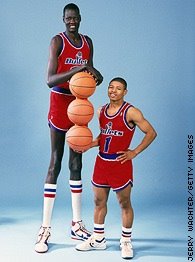
PG Muggsy Bogues
SG Earl Boykins
SF Michael Cooper (for the socks and the D)
PF Charles Barkley circa his days with the Sixers
C Manute Bol

Not much else to this post, but it'll be interesting to see who people come up with.


Tuesday, March 14, 2006

Psychology: cheap tricks in pickup games


Admittedly or not, each of us has some cheap tricks on the basketball court. A week ago I ran in a full court game where I had the misfortune of playing against this guy--more than likely some kind of triathlete--whose game was basically predicated on sprinting down the court after every made basket before the defense could get back, and cherry picking easy layups all evening. It was kind of legit, but pretty annoying all in all. Since the guy on my team assigned to guard him basically took the night off on D, I was left with the unenviable task of running wind sprints all night to prevent this.

As we advance in age, we need to make up for our lack of athleticism by doing whatever possible to get an edge. Jeff has devised an unstoppable move of simply turning around and around again until you finally bite on a head fake that allows him to shoot an easy layup. I like to grab jerseys and throw some 'bows every so often after grabbing rebounds, and sometimes my forearms do the talking when I get beat to the spot. So I ask fellow setshotters: What are the best (or worst) cheap gimmick moves you've seen people use to fight off the effects of diminishing athletic skills?

Sunday, February 26, 2006

NBA: Save the Knickerbockers


Man, what's going on with the Knicks? It was only a few years ago that they were an intimidating defensive stalwart holding opponents to low scores and thugging their way to the top of the Atlantic Division. Last night their new vaunted backcourt of Marbury and Stevie Franchise gave up 46 points to Gilbert Arenas....in 3 quarters! Although I've never been a huge Knicks fan, I do pine for the days when they were a force in the east, and their rivalries with Miami and Indiana made the NBA fun to watch. That organization is a mess, and most people are pointing fingers at Isiah Thomas and the Knicks top brass. My question to my fellow Setshotters is if you were the GM of the Knicks, how would you start to clean up the mess...

...given that many of the squads draft picks have been mortgaged away, and high-rent, long-term contracts for players like Jerome James are keeping you at the salary cap limit. To make matters worse, New York fans and media are too impatient to rebuild, thus perpetuating the cycle of trading away your future players for overpriced aging talent. Where do you begin? And I wonder if somehow we can get Woody or Soon Yi to chime in on this one? Should the Knicks turn to the IMF for help?

Tuesday, February 21, 2006

NBA: New Ideas for All-Star Week


Let's face it. NBA All-Star weekend has gotten pretty boring. That skills thing is silly, and the dunk contest has basically become an excuse to show candid shots of P-Diddy, AI, and Dirk clowning around for an hour with Eva Longoria looking impressed on the sideline. It seems like it's time to gets some new, creative events out there for All-Star weekend.

Jeff suggested the excellent idea of a game of horse between NBA stars, although in his typical modesty he attributed the idea to someone else. I think maybe a 2-on-2 game featuring teammates might be fun to watch. I would like to see what our readers think would be some good new events to liven things up...

Monday, February 13, 2006

Careers: Playing for peace

UConn hoops fanatic and friend of Setshot Suzanne referred us to this organization. "Playing for Peace" is a non-profit agency that bridges social divides, develops future leaders, and educates kids through basketball. Their modus operandi appears to be getting kids from opposing social and political groups to play ball together: white kids and black kids in South Africa, Catholics and Protestants in Northern Ireland, Israelis and Palestinians in the Middle East.

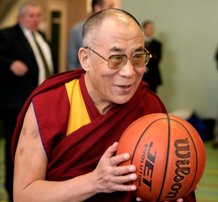
It looks like they're getting some good publicity. Steve Kerr is an advocate, and the Dalai Lama (pictured) is reported to have been breaking ankles and backboards at a recent exhibition, earning the streetball nicknames "Monky Business" and "Transcendental Conflagration." (Ok, I made those up.)

Playing for Peace has a bunch of interesting-looking job opportunities at its various sites. It could be a good way for the aging baller to prolong his involvement in the game while doing good in the world.


Tuesday, February 07, 2006

Psychology: Your greatest hoops moments


After several months of being on the shelf with plantar fascitis, I finally played some three on three pickup ball at USF's Koret Center. I don't know what happened. My team won several games in a row, despite our obvious physical shortcomings--both my teammates were well over 50, all of us were balding, and two of us were under 5'8. The guy guarding me, a bratty looking undergrad who saw me hobbling and wasn't taking me seriously at all, started talking smack and challenging me to shoot, which I did...

...I hit about 4 in a row, slicing through the lane like a slow, gimpy Steve Nash, later dishing to open shooters for treys or scoring on dribble penetrations and once on a hop-step move. I even knocked down some treys in the dude's face directly after he had been challenging me. I wanted to shout "whaaaaaaaat!!!!!!" but fortunately reason got the better of me. Maybe it was just the fun of playing for the first time in so long now that every game might be my last, but it was one my greatest pickup hoops moments of all time.

I now ask the good members of Setshot a simple question: What are some of your greatest moments playing pickup ball?


Saturday, February 04, 2006

Video games: What to do when injured


The last several months I've been on the DL from playing basketball due to plantar's fascitis. Unfortunately the only way to get my hoops fix has been from offering up lousy trades in fantasy sports and more importantly, bball video games. It leads to the natural topic for my fellow setshotters: What are the best hoops video games of all time?

My vote would go to NBA Jams, which cemented the phrase "he's on fire" into NBA lexicon forever as players like Jeff Hornacek and Charles Oakley did 720 dunks after making several shots in a row. Justin and I once had a good season of NBA 2K3 where I was inexplicably able to score 23 a game with Celtics reserve Eric Williams. Double Dribble was the best game for the Nintendo, even though there were certain spots on the floor where players would shoot 100% from 3-point land.

There's a couple of games that were fantastic in their day that get slept on: Arch Rivals, the original Atari video game that featured two stick figures walking back and forth and shooting on a two dimensional straight line representing the "hoop", and of course the classic Jordan vs. Bird, where an irate Janitor would come clean the floor and admonish MJ or Larry after shattering the backboard with a ferocious dunk.

Fellow Setshotters, what are your favorite hoops video games, and why?

Monday, January 30, 2006

Race: "Such a natural team leader..."


The other day at the gym I overheard a conversation about lilly-white Duke guard J.J. Redick, where a Caucasian man remarked that "...even though Redick is slow and can't dribble, (blah blah college team) tried everything to stop his 3-point shot, and they even put an athletic black guard on him, nobody could stop him...". After cringing, it brought up a lot of questions in my mind about the language of sports fans and journalism.

Among fans, even among well-meaning fans and commentators who mean no harm, there are a lot of troublesome examples of coded language in sports coverage, especially with the rise of ESPN, 24 hour sports business coverage from white guys in Armani suits, stats sports tickers, and most notably, fantasy sports, where everyday people simulate ownership of sports players and act as a fantasy GM of a sports team managing a fantasy roster of mostly black players.


White players coming into the league are almost invariably compared to Bird, regardless of their game. Yahoo!’s fantasy sports page features "The Big Board"” ranking players from 1-50 based on their statistical performance, mostly African-American players reduced to pure commodities ranked and evaluated somewhat like slaves on an auction block. In some fantasy sports leagues, players are drafted by auction, where owners ‘bid’ for the right to own the statistical production of athletes. When most of these athletes are African-American, is this a modern-day virtual slave auction going on?

In a recent conversation with Jeff, I was particularly critical of Ron Artest, whose recent shenanigans seriously damaged what could have been a very dangerous Indiana Pacers team. Jeff pointed out rightly that out that while Artest's actions breaking team rules by publicly demanding a trade and betraying his team were deplorable, it is common to hear the silent but racist language that insists that African-American athletes like Artest should shut up and be grateful for the huge piece of the pie they are given, even though it pales in comparison to that enormous reserves of almost exclusively Caucasian team owners who profit enormously from the labor of these athletes.

NBA players like Rasheed Wallace and Jermaine O' Neal have made attempts to publicly compare their situation to the situation of very well paid slaves and commodities, and the NBA, led by David Stern, has put the clamps down quickly on the dialogue. The NBA's recent dress code certainly smacks of trying to “whiten up the league" a bit. Phil Jackson, in his book The Last Season also quipped about Wallace that someone being paid $17 million dollars a year to play basketball and stay in four-star hotels has little basis to complain about being treated like a slave.

What are some other examples of racist codes in sports? Are the actions of African-American athletes problematized more than their Caucasian team owners in media? Are fantasy sports lovers unwittingly corroborating in a virtual dialogue revolving around racist notions of ownership? Is the notion of team really deteriorating in sports? Or is that just another code to justify playa hating African-American NBA stars who can do what normal slobs in offices can't?

I welcome the feedback of those wiser than I...

Sunday, January 29, 2006

Fashion: Posing for the team photo


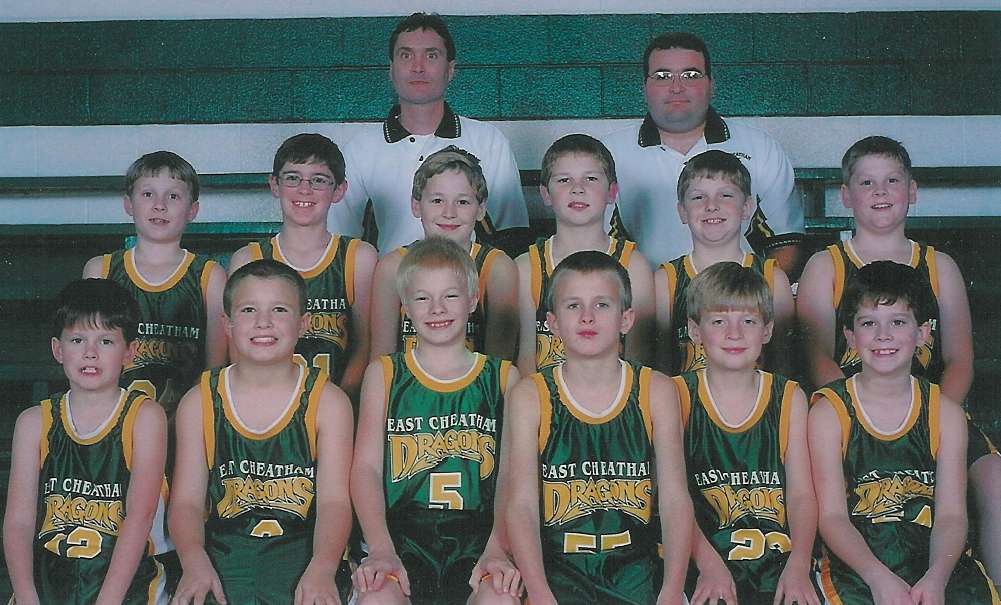
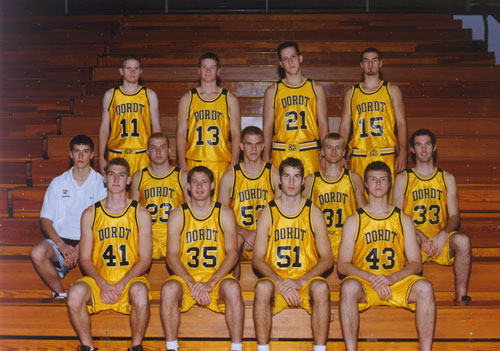
The other day somebody ended up at Setshot after searching for "how to pose teams for a team photo". I'm sure they ended up disappointed. So I figured I might as well try to address their question.

After an unscientific image search on Google, I found that the most common pose was the front-facing two-row, though this also had its one-row, three-row, and four-row variants. The single-row could also be performed in profile.


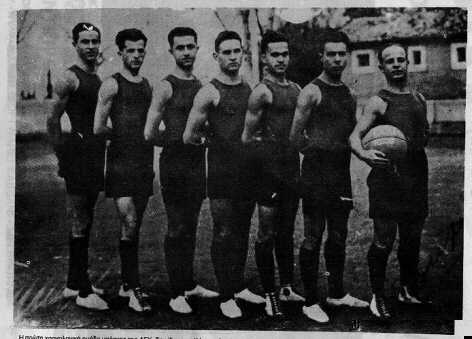
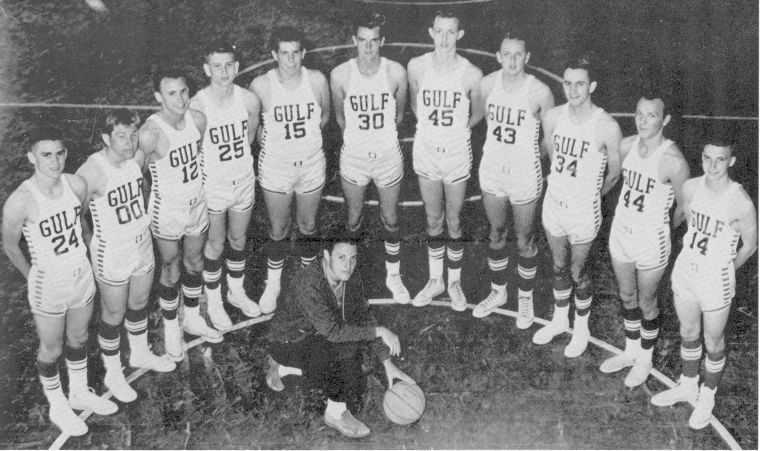
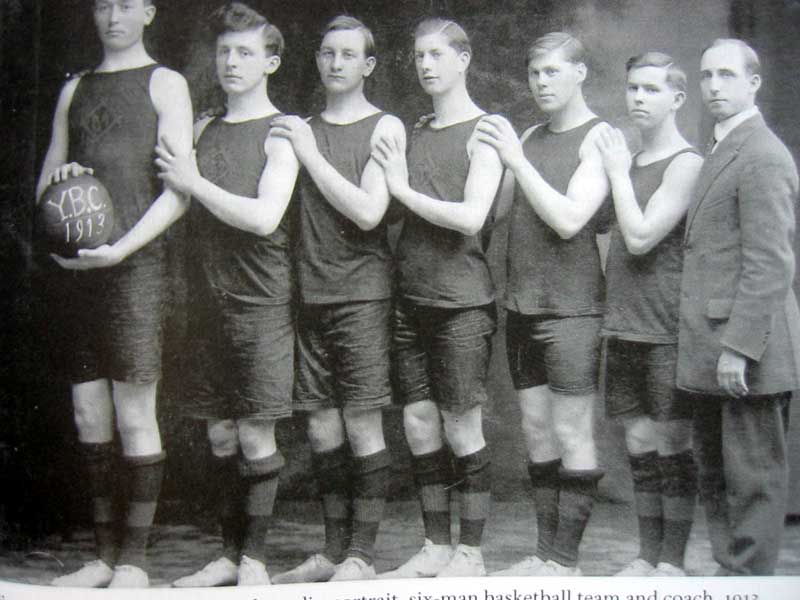
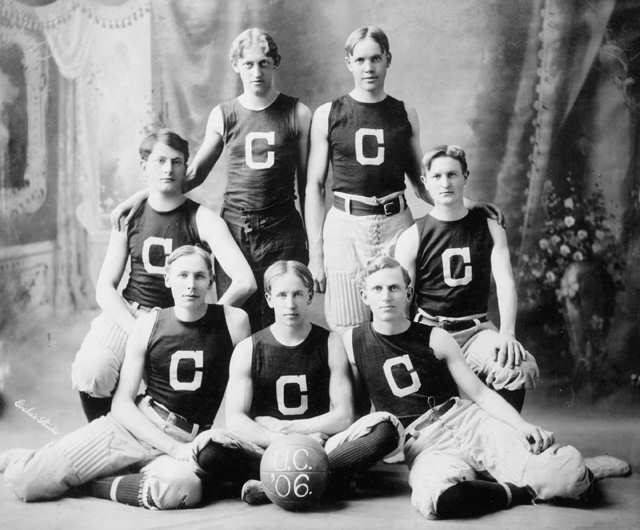
More interesting poses (most from olden times) included "the indian-style" "the circle", "the semi-circle", the "I for Idaho", "the streetclothes", "the lunch line" and "the stairstep".


Finally, John Ibson in "Picturing Men" argues that displays of male affection in team photos have become more taboo over the course of the twentieth century. As examples, he provides "the bicep clutch" and "the pile" from the turn of the century.

Fundamentals: Old-timer basketball camps


One day I asked Jeff if he thought it was possible for somebody my age to improve his game. "Definitely", he said. But I'd hit a plateau. I was playing and shooting regularly, but nothing really changed.

I showed him my one move--catching the ball on the wing then looping around the man guarding the point and down the lane. He showed me a couple of variations on the move including one that involved going to my left. When I confessed I didn't have a very strong left hand (he feigned surprise, but was probably just being polite), he suggested that I dribble with two balls every day.

It sounded like a great idea, but I've never done it. I'm just not the type of person to do drills of my own volition. Which is why adult basketball camps have caught my eye. There are some crazy expensive fantasy ones--including those by Darryl Dawkins, Coach K, Rick Barry, and Michael Jordan ($15,000; see the story in Sports Illustrated), but perhaps, the more promising (and less expensive) one for me is Never Too Late Basketball (see the story in the NY Times). They have ten-week courses in Boston, San Francisco and New York for $175. They also do weekend camps around the country.