Showing posts with label strategies. Show all posts

Wednesday, April 27, 2011

The science of next

Ok, let's get a little social sciency up in here. I want to discuss something I've thought about for a long time: How does the process of "getting next" affect the dynamics of a pickup game? I've played in a lot of different games with various ways of doing this, but I think that there are two main procedures in the U.S.

Through democratic selection. The next five players to show up get next game, regardless of who they are. In general, those who have been waiting the longest are the next to play. If there are fewer than five players waiting, losing players engage in a shooting contest to fill the available spots. This is the most common form of next.

Through conferred authority. The next player to arrive becomes team captain. The captain has the liberty to accept or reject other players who ask to play with him. If the captain wishes, he can even select players from the losing team to join his squad, despite the fact that they are "jumping over" players who have not yet played. This is a less common arrangement, and I've mostly seen it practiced on the east coast.

Now I'm going to argue that the conferred authority method is worse on all counts. For years in Boston and New York, I played in games that used the conferred authority method, and it never made sense to me. Why not?

1. It lacks consistent internal logic. This method causes massive confusion. Who has next? Can I play with you? Why not? If I can't play next, can I play with the team waiting second next? Third next? Where is my place in the queue of nexts? At its worst, the conferred authority approach can produce a long string of captains with no teammates, each waiting to cherry pick the best players from losing squads. When games get crowded, the system's vague logic and players' intense desires to play spark a conflagration of arguing.

2. It unfairly stacks teams. This method eventually creates extreme team inequalities. Next teams are invariably getting stronger and stronger because they are selecting the best available players. Weak players, meanwhile, are being sent to the back of the line. When these weaker teams finally make it onto the court, they are quickly dispatched by the high quality team that currently owns the run. Ultimately, the weak players leave because they keep losing and then they have to wait an hour to play again.

3. It changes the culture of the game. Winning becomes the primary goal of playing. This is because the conferred authority method essentially changes the game's supply and demand of players. Since some players are in more demand than others, the likelihood of playing after losing is variable across players. Those who do not expect to be picked up by a next team must win to keep playing, or they will be subject to the humiliation (and long wait) of finding a spot amongst the sea of nexts. The need to win is a direct reflection of self-interest, which runs rampant under this system. Average/bad players who do not advocate for themselves will not play very often. (Good players will get picked up again no matter what their personality.) Thus, all average players must seek above average teammates to increase the chances of victory, and at the same time, above average players seek to avoid playing with the average players.

4. It encourages shady behavior. For all the reasons described above, players (especially captains) must use deceptive tactics to keep their teams strong and avoid relegation to "last next." This usually involves dissuading or refusing subpar players who ask to play. The most common form of shady behavior is when a waiting captain targets a star player who is currently playing and holds a spot for that player, even though others are coming up and asking to play. Again, this is technically allowed, but it just seems unethical. Many times, I'd approach a waiting captain and ask to play, only to be told that "his friend was in the bathroom." Of course, when the next game started, the "friend" turned out to be a star player who just lost. When shady behavior is built into the norms of the game, the norms of the game should be questioned.

Overall, the conferred authority method produces more competitive games, but also more stress, conflict, and unhappiness among players. I also feel that it compromises the integrity of the pickup game because it is so profoundly undemocratic. The larger point here is that the structural conditions of play can exert significant effects on who plays, how the game is played, and how players relate to the experience of playing. The conferred authority approach leads to a competitive environment structured rigidly around a hierarchy of skill. On the other hand, the democratic method mitigates this hierarchy and fosters a fair-minded approach to the game where playing time is freely available, regardless of how good you are.

Monday, November 09, 2009

Intramural update: "No your roll"

To start, an anecdote from Jack McCallum's book :07 Seconds or Less. When journeyman Ledell Eackles played for the Miami Heat, his contribution to one particularly memorable team meeting was walking up to the whiteboard and writing, "No your roll." Teammate Glen Rice's reply: "Sit down, dumbass."

Ok, I mostly included that because I think that the story is funny, but it also relates to this post.

At the halfway point of the season, our intramural team is 4 and 1. The first game seemed a bad omen: we played very poorly and lost to a team we should have beaten. The second game resulted in a win, but not an encouraging one. We played a team that was significantly worse than us and barely survived. I think that our main issue was getting adapted to one another. None of us is really used to playing with so many capable teammates, so we were all deferring too much, especially to our star forward (who was also deferring). We also lacked defensive intensity because we were still getting used to the refs and were not sure what their fouling tolerance was going to be.

But the last three games
all victorieshave been great. Our defensive intensity is way up and guys have really been looking for their shots. The ball movement has been excellent. Our big men have dunked on many fools. One game we shot about 60 percent from three and rang up the highest score that the league has seen this year (80).

The biggest issue that I have had to deal with personally is learning to be more of a role player. When I play pickup at the gym, I'm generally the 2nd or 3rd shooting option and the main ballhandler/distributor. That means that I have the ball in my hands a lot and feel like I can take a substantial number of shots during these games. But our intramural team is so good that I've had to accept a lesser role. I come off the bench, don't get to handle the ball as much, and take far fewer shots than I'm used to.
The real difficulty for me is negotiating the tension between deferring to better shooters and retaining enough aggression to still be effective on the floor.

When I was younger, this situation might have been more bruising to my ego, but I'm actually happy to be a second banana on this team because my teammates are so skilled and it's clear that I should not be one of the primary scorers. The culture of our team softens the blow as well. Everybody is really supportive of one another and that makes it easier to accept reduced responsibility. When I initially put the team together, I prioritized inviting high-character players because I knew that getting along was much more important than assembling transcendent talent. As I watch our opponents snipe at each other
after losses, I know that this decision has payed off.

I'm still struggling to no my exact roll, but I'm confident that I can make peace with this. We're getting better with each game, and the more we embrace our proper places on the team, the better we will ultimately become. Tougher opponents await us.

Sunday, August 31, 2008

Politics: McCain panders to aging ballers

John McCain's choice of Alaska governor Sarah Palin as his running mate has the media clamoring to paint the selection as a political ploy to win over disaffected female voters and appease the Republican party's conservative base.

Setshot knows better. Palin (number 22 in the photo) was actually chosen to draw the politically powerful aging baller community to the GOP in November's election.

Democratic candidate Barack Obama is well known for his love of pickup hoops, even at his advanced age (47). YouTube is filled with clips of Obama balling on the campaign trail. (Check out this excellent mixtape.) Clearly, Senator Obama has the skills to
pay lower the bills.

But what about Governor Palin? Apparently, "Sarah Barracuda" (her high school hoops nickname) played point guard on a state championship squad from Wasilla, Alaska, but there is scant evidence that she plays anymore.

Nice try McCain, but the aging baller community is too savvy for that. Despite our temptation to support a cute former high school basketball star, we're going to stick with our man Barack, who continues to find time to play the game, and has even proposed building a court in the White House.

As always, Senator McCain, the ball doesn't lie.

Monday, May 19, 2008

Tips: Kareem 's advice to players over 40

Kareem Abdul-Jabbar writes a cool blog for the LA Times that reports "the insights of the NBA's all-time leading scorer."

Recently, I was directed to this entry, in which he gives some solid advice to ballers
over-40 who want to keep runnin' with the young-uns. In so doing, Abdul-Jabbar touches on issues that have become Setshot staples: lack of respect, diminishing abilities, and increased injury risk, to cite a few. I'd recommend reading his post, which is pretty brief, but if you need further brevity, here's a summary of Kareem's advice:

1. Lift weights.
2. Stay in shape and keep your cardio conditioning up.
3. Specialize more in your play.

By the way, that's a vintage photo of Kareem giving me basketball advice in the 1970s. He was demonstrating a technique called "Kermit Washington style."

Wednesday, April 16, 2008

Strategy: Psychological tactics for aging ballers

As I've gotten older and more injured, my game has evolved to compensate for reduced mobility and ever-slowing reaction times. Previous Setshot posts have discussed scouting, ball tricks and other strategies for remaining effective as an aging baller, but lately I've been thinking about different psychological ploys that can be used to deceive, demoralize or intimidate opponents. As a smaller player, I've always utilized these approaches to an extent, but in recent years I've had to rely on them even more, and I've found a few that work very well for me.

I think of many of these psychological strategies as "precedent setting." That is, they are things that I do early in games to establish a pattern that my opponent believes will continue. Later in games I may abandon them, especially if they have already accomplished the desired result.

For example:

1. I run harder when I sense my man is winded. Early on in games, especially the first game of the day, I often run out of air, only to regain it when my lungs adjust and I get a second wind. When I think my opponent is on his "first wind," I make it a point to run my ass off for a few plays, even if it kills me. I also do a lot of curling around screens because my man will have to expend energy to get over and catch me. The payoff can be great, as players will make defensive adjustments to my sprintingsuch as giving me more space and switching more often on screens. I won't (can't) run this hard for the whole game, but my defender doesn't necessarily know that. One of the most common things I hear opponents say about me to their teammates is "he runs a lot." This is sort of true, but it's partially due to advertising.

2. Early in games, I box out hard on every play if my man is bigger than me. I don't want to deal with bigger opponents in the paint. I'd rather compete on the perimeter, where I'm more likely to have an advantage. So what I do is set a precedent by boxing out aggressively at the start of games. Again, I won't necessarily do this for the whole game, but I find that most pickup players don't really like to deal with this level of effort, and at the end of games, I almost always find myself guarding on the perimeter, no matter how big my man is.

3. I talk to imaginary teammates. What I'll do is call for a screen that isn't really there, pointing to a spot on the floor and yelling "Screen! Screen here!" to the empty air. To make it even more convincing, I open my eyes as wide as I can and nod, just like I would if I were really asking for a screen. If I sense that my defender has shifted in anticipation of the screen, I'll drive the other way, having been given a few extra inches of space. A similar trick is to yell "Post up!" to an imaginary teammate (or even a real one), hoping that my defender will drop off to guard the entry pass and give me space for a jumper. I did this last week, sticking a 15-footer as my young opponent fell back to double our center. As we were running back up court, my defender rolled his eyes, extended both his middle fingers and screamed "Yo f*ck you Jeff!" I loved it.

4. If my defender is watching me instead of the ball, I follow a nonexistent shot with my eyes. Try it. Just make your eyes and head do a parabola
like you're watching a jumper in flightand see how often your defender will turn to look for it. (Make sure no one is dribbling at the time. The sound gives the trick away.) It's a great opportunity to run away from your man, and after you do it a couple of times, he'll start to get confused about when your eyes are lying and when they're telling the truth. He may even lose out on rebounds because he'll keep looking at you when a shot is actually in the air. More importantly, it will annoy him.

A related tactic I use is looking at the floor and acting nonchalant when a long pass is coming to me. My defender will be relaxed because it doesn't seem like anything is going on, but I'll suddenly wind up with the ball in my hands, racing towards the basket. I learned this one from John McPhee's book, A Sense of Where You Are, about Bill Bradley's playing days at Princeton. Bradley was reported to have outrageous peripheral vision (he could look at the floor and see the ceiling), and he did these kinds of tricks all the time.

5. I pass early and shoot late. Early in games, I try to play "true point," focusing on ball distribution and offensive flow. I'll be aggressive, but I'll mainly drive with the intention of dishing. On the perimeter, I'll mostly look to reverse the ball to the weak side, trying to make the defense to rotate and adjust. What I want to do here is make the defense forget about me as a shooting threat. Later in the game, however, I'll ramp up my shooting because I'm usually getting more space from my defender. I have a fetish for taking shots with the game on the line, and I think that this strategy gets me better looks during crunch time.

Setshotters, if you'd like, share your own psycho-tactics below.

Saturday, March 15, 2008

Psychology: Scouting in pickup games

The other day I was waiting for next game at the gym, talking to a teammate-to-be about this teenage kid that was playing and that I would have to guard. The kid was fast and had some good moves, but he didn't seem to be able to shoot from the outside, so we decided that I should go underneath every screen and dare him to put it up. When we came on, I went with the scouting report and cut under every pick, letting the kid have any three he wanted. It worked. He had been the leading scorer in the previous game, but we held him to one basket.

I really enjoy scouting other players in pickup games, but I feel sort of alone in this. Not only do I find it hard to get others to talk about player tendencies and good counter-strategies, but many people look at me like I'm a nutcase when I start developing scouting profiles of opponents. And it's not like I'm doing Sabermetrics or anything out there, I'm just saying stuff like:

"He can't shoot with his off hand. Force him left."
"He's really out of shape, so you should run."
"He always spins to the middle."
"He won't shoot from beyond 12 feet."
"Watch his hips. That's where he's going."

Sometimes I engage in more psychologically-oriented scouting, like:

"He's mentally fragile. If you show some toughness in the post, he'll shut down and stop playing hard."
"His ego is bigger than his game. Let him shoot and freeze his teammates out."

I love this stuff because it takes the game beyond the physical aspects of play and introduces interesting strategic and psychological considerations that can be exploited. But again, it's hard to find players who are willing to have these discussions with me. Don't get me wrong, other players are usually gracious and they listen to me ramble, but no one ever seems as enthused as me about this facet of the game.

Why not?

I think that part of it is laziness. Many people just come for recreation and exercise, so they don't feel that they have to engage the game at this level--fair enough. Some other players just don't possess enough basketball knowledge to have these discussions. But I think that there are some, particularly alpha male types, who think that the game is really truly about physical dominance, and that if you can't beat the other guy with your game, you don't deserve to win. Thus, there is no need to talk about the strategic stuff. Just get out there, bust your man's ass and walk off like a stud.

Or maybe I'm just going about it wrong. Maybe I have to introduce scouting insights more gently and not seem like I'm taking the game so seriously. Whatever it is, I'm not going to stop scouting at the gym. Not only do I believe it to be effective, but it's really a lot of fun for me.

Thursday, February 28, 2008

The Midrange Game

Analysts have long lamented the wilting of the midrange game, and here's some pretty definitive proof. The chart shows data from 340,000 shots over the past 5 years of college basketball. Things might look a bit different if Joe Forte's 1,055 career attempts had been included...


Tuesday, March 14, 2006

Psychology: cheap tricks in pickup games


Admittedly or not, each of us has some cheap tricks on the basketball court. A week ago I ran in a full court game where I had the misfortune of playing against this guy--more than likely some kind of triathlete--whose game was basically predicated on sprinting down the court after every made basket before the defense could get back, and cherry picking easy layups all evening. It was kind of legit, but pretty annoying all in all. Since the guy on my team assigned to guard him basically took the night off on D, I was left with the unenviable task of running wind sprints all night to prevent this.

As we advance in age, we need to make up for our lack of athleticism by doing whatever possible to get an edge. Jeff has devised an unstoppable move of simply turning around and around again until you finally bite on a head fake that allows him to shoot an easy layup. I like to grab jerseys and throw some 'bows every so often after grabbing rebounds, and sometimes my forearms do the talking when I get beat to the spot. So I ask fellow setshotters: What are the best (or worst) cheap gimmick moves you've seen people use to fight off the effects of diminishing athletic skills?

Thursday, October 27, 2005

Tips: How to suck at basketball


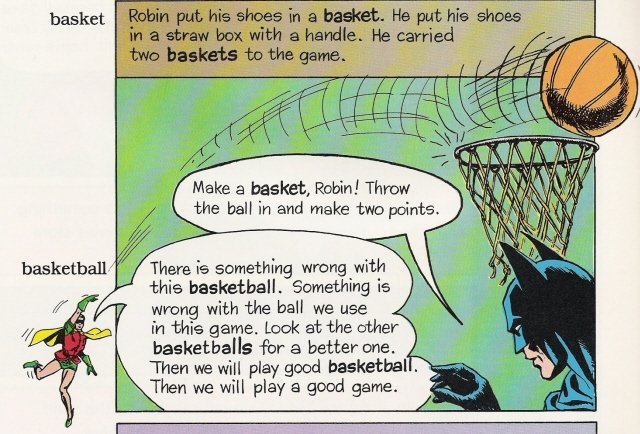
Charles Rempel at Van Gogh Goghs provides a detailed guide on "how to suck at basketball" in either "athletic" or "spaz" mode (Robin demonstrates the latter above). Rempel offers tips on wardrobe, running, catching, dribbling, shooting and etiquette. For catching tips--athletic mode, follow the jump.

Hold out your hands to your teammate, giving him or her a target. Then, when your teammate passes the ball, do one of three actions:

1. Turn your head right before the ball gets to you and try to catch it without looking. This gives the impression that you are trying to catch the ball, but also trying to attack the basketball before you control the ball. It looks like hustle. When you runback down the court on defense, point to yourself and say, "My bad."

2. Run away from the spot. This looks like you're trying to get open again, and makes the passer look like he missed his opportunity. Glare at the passer and point to your temple, signaling him to think next time.

3. Put your hands down to your sides immediately, then throw one hand up and try to scoop it to you. Now everyone thinks the passer was a little late passing to you. Glare at him or her and pointedly ask them why they didn't throw the ball earlier, when you were open.

Strategy: Talking trash

I've never been a good trash talker on the court, but I do appreciate its artistry. The best trash talker I've ever known was the 3rd string PG for Northeastern U. His name was Lawrence, but everyone called him "Uzi" because of his prolific shooting. Uzi was only about 5'7" -- but an amazing player. He would play regularly in the pickup games at the gym and dominate. No one could stop him from scoring, as he had unlimited range and could finish in a variety of ways inside, including posting dudes up. He also controlled the glass because of his athleticism, awesome court intelligence and surprisingly long arms. And Uzi could just break a guy with his incessant trash talk.

He loved to tell the big doofy guys that they were "wastes of height" and then count off his rebound total, and theirs, over the course of a game. "I just got my fifth rebound. You're 6'4" and you got two. Oh, there's my sixth. You still at two by the way." If you ever talked back to him and his team beat yours, you'd never hear the end of it. He'd spend the entire break between games picking on every single flaw in your game, personality and appearance. ("Hey, Great White Dope, Tragic Johnson, where'd you get them shoes? Those shoes are too nice for you. People might look at 'em and think that you can play.")

I loved Uzi. We were basketball friends, so we never got into it with each other. Plus, he was about 100 times better than me and would have crushed me if I ever displayed any impertinence. The truth is that he was actually kind of a role model to me and the other gymrat guards, and whenever I heard him talking smack to someone, I liked to imagine that it was me with all that confidence and bravado, getting into some big doofy guy's head.

Share your own tales of trash talk below.

Wednesday, October 19, 2005

Careers: Has age changed your game?

I thought I'd follow up Old School's retirement post with another perspective on handling the ravages of time. I think that anyone who plays ball beyond their prime has got to consider changing the way they play.

This issue is beginning to loom large for me, as I am a guard, and get by primarily on speed and quickness. At 31, I'm not getting any faster or any quicker, and my vertical is approaching Cherokee Parks-like patheticness. Luckily, I am still agile enough to hold my own in most pickup games, but the time has obviously come to think about adaptation. Ain't no intelligent design bullshit on the court; you either gotta evolve or go the way of the dinosaur.

Here are some things I've done to compensate for the effects of age:

1. Play without ego. Think about the whole game, and every single thing I can do to benefit the team. This includes a lot of unglamorous stuff like setting screens off the ball and making "the pass that leads to the assist." Also, play better defense.

2. Think harder about team selection. I realize now that playing with unselfish, hardworking players is better than playing with talented self-centered players. When I put together Yellow Fever -- my 2004 NYU intramural squad -- I mainly looked for players I knew who were nice, unselfish, and diligent. While we didn't win the championship, we advanced fairly deep into the playoffs, and we had a great time the whole season because we all got along and respected each other on the court.

3. Shoot better and with range. I can't get to the hoop like I used to, and am unwilling to absorb the degree of contact that I could in my early twenties. So I have become more selective about when I drive, and what will happen when I get into the lane. Jump-shooting opens up my options a lot. I need to keep my defender off balance by convincing him that I can hit 18-20 footers with consistency. This is a mental game, and when it is successful, it becomes easier to drive, and I find a lot more ways to force awkward defensive rotations without getting whaled on.

4. Misdirection and chicanery. No-look passes are not enough. Now, I try to use my entire body and soul to convince the defender that I'm passing left before dishing right. I've developed a bunch of ballhandling tricks which are not always effective, but when they are, they can be demoralizing. I also have some off-the-ball fakes, like pretending to follow the trajectory of a shot with my eyes. When the defender turns to look at the (nonexistent) shot, I run away from him. Here's another one: when my opponent has tipped the ball and it is going out of bounds, but he still has a shot at it, I run towards the ball and pretend I'm going to save it. I get close, but instead of saving it, I just let it go. It's still out off him, but he will have instinctively backed away from the action, or hesitated too long to get the ball.

5. "Clean-dirty" play. I never try to hurt anyone, but am not too proud to hold someone's shirt for a second to disrupt a fast break, move a little on screens, or give a gentle poke in the belly-button when I arrive late on a shooter (this really works).

Add your own strategies for dealing with the effects of age below.


Tuesday, October 18, 2005

Tips: How can I stop Jeff from schooling me?

From an anonymous reader (no, it's not me) comes the following question: "How do I stop Jeff's seemingly unstoppable "keep on head faking and twirling around until you finally give up and jump" maneuver he's been using against me for the last four years or so?"

I'll try to solve the Jeff problem below. Meanwhile, you can post your own questions here and we'll try to answer them.


Here's what I try to do. I watch his hips instead of his head or arms so I know where his body is going. When he finally leaves his feet I jump and try to block his shot. I almost never do--he's too quick, but I hope to alter it somewhat. Still, he frequently kills me with a ridiculous reverse layup. Come to think of it, this really isn't working so well for me. Any other ideas out there?

Thursday, October 06, 2005

Moves: Tricks of the trade

Getting old sucks. Especially for ballers. The legs slow. The eyes get weak. Injuries accumulate. But Setshot is here to bring you hope! Many aging ballers have developed a specialty move. These moves are often rooted in chicanery and misdirection, as opposed to athleticism, and are a way for us to counter the superior quickness and hops of younger players.

I've developed a few such moves over the years. My favorite is getting the ball near the basket, tucking it between my legs, and throwing a fake pass around my defender. If he bites, he will turn to see where the ball has gone, whereupon I retrieve the rock from between my legs and lay it in. In addition to utilizing the strengths of the older player (the mind!), this move has a certain streetball appeal that the young folks like. Whenever I pull this off, kids on the sidelines will invariably ooh and ahh.

Thanks to Cary and Mothy for suggesting this topic. Here is a space where we can share our secret moves with each other.

Wednesday, October 05, 2005

Strategy: What should I do when my team is misusing its talent?

Tonight, I had a good 4 on 4 full court run. The only problem was that my team lost back to back games by close margins because, in my humble opinion, we weren't using our assets appropriately. We had two big tall guys who tried to play guard all game. One of these was the most talented player on the team, but it didn't do us much good. Meanwhile, the short guy, an excellent ball handler who could have easily played point, was at forward. All game our big guys shot jumpers with nobody underneath to rebound, plodded up the court--killing our transition opportunities, or penetrated (which was fine with me, if they would also distribute a little). First, I asked the short guy if he could take over the point. He agreed, but didn't actually do it. Then I tried to take point myself. Unfortunately, the big tall guys (who may have been friends) wouldn't give it up. They wouldn't throw me the ball on the inbounds or the outlet (and as they were the tallest, they got most of our team's rebounds). I finally gestured to the self-appointed point guard to give me the ball at the top of the key, but he wouldn't. "Aren't you a forward?" I said. He just smiled and kept doing what he was doing. We lost another game. I see this all the time, we have plenty of talent, but misuse it. And typically, I have trouble convincing people to listen to me--I think because I'm not the most talented player on the court and my moves are a tad old school. Why do people insist on playing the wrong position for their team's needs? Why won't anybody listen to Old School? Maybe I should just let go. But I like to win.

Tuesday, September 27, 2005

Strategy: What do I do about the ballhog on my team?


This question comes from myself and was the inspiration for this blog. I occasionally play in a noontime game that is filled with teens who only want to shoot. After another crappy outing, I decided to google "What should I do about ballhogs?" I didn't turn up anything and this site was born. I'll give the question my best shot, but I'm hoping our readers can help out some more.

Ballhogs are buzz kills. It's just no fun to play with them. My first instinct when I'm stuck with one is to hog the ball myself. But this is probably not the right approach. A team with two ball hogs will soon have five and you'll all be sitting out the next game.

The first thing I would suggest is to make sure the ballhog doesn't bring the ball up the court. Don't throw outlet or out-of-bounds passes to him and try to get some of the other players to do the same. If you're not playing guard, become a third guard, so that that you can work to keep the ball out of his hands. Ballhogs are often loudmouths. He'll complain. Tell him you are planning to throw him the ball. And then do. Just make sure that you only give it to him when he's in a decent position to score, not ten feet behind the three point line. If you've kept the ballhog from bringing up the ball and from running the point, it seems like you should have a good chance of distributing the ball to the whole team, including him--but only when it's appropriate. Other thoughts? And what to do when everyone on the team is a ballhog?