Showing posts with label training. Show all posts

Tuesday, February 08, 2011

Equipment: Bracing myself

I've suffered a setback on the path to recovery from ACL surgery. In December I was playing pickup in NYC and, on the very last play of the entire night, tweaked my surgically-repaired knee. It didn't feel that serious at the time, but some swelling persisted and for a few weeks after, it just felt weird. I went to see my ortho doc, who examined my knee, told me that it seemed loose, and ordered an MRI. The MRI showed some fraying and stretching of the ACL, but my doc did not recommend surgery. Instead, he suggested I "brace it" and gently return to basketball.

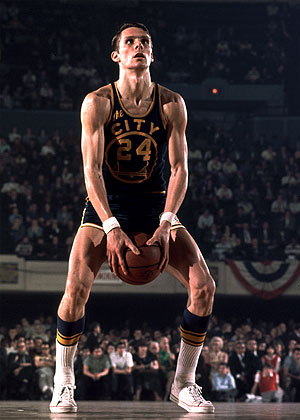
At first I was happy with this diagnosis. Another surgery was the last thing I wanted, never mind the ensuing rehab. But today I went and got my brace. This thing is a f*cking monster! (The pic on the left is the actual model I got.) It's pretty light, but I've been wearing it all day and it definitely lets me know that it's there. It also makes me feel like a character in a sci-fi movie who's been partially reconstructed with robot parts.

Over the years, I've seen many aging ballers wearing these big-ass braces (including Old School after his own ACL repair). To be honest, my opinion of these players was a mix of admiration and pity. I admired them for gutting it out after their bodies had failed them, but pitied them for having those same failing bodies. When we are young, it's hard to imagine a time when we will need such equipment to continue playing a child's game. It's easy to scoff at the old guys doing everything they can to keep up. But soon enough, we are those old guys, and we are faced with enormous, pressing questions.

-Should I keep playing?
-Should I retire?
-What can I expect from myself on the court now?
-What skills must I develop to keep playing effectively?
-What exactly is this "golf" that ex-ballers seem so obsessed with?

The brace serves as a constant reminder that I am on the steep part of the downward curve of hoops ability. It also suggests that I've taken basketball to a certain logical endpoint in my life. When I'm sacrificing my future health for a few moments of adrenaline on the court, I'm not so sure my priorities are in order. In a way, bracing my knee means bracing myself for the inevitable.

Still, I'm going to keep playing. I'm lugging this brace over to the gym this weekend and testing it out. Even though I'm older, slower, and partially robotic, I can't let go of the game that easily, especially after the surgery and rehab I've gone through in order to keep balling. There's got to be a few kids I can still cross up, right?

Setshotters: Please share your knee brace stories with us.

Monday, May 19, 2008

Tips: Kareem 's advice to players over 40

Kareem Abdul-Jabbar writes a cool blog for the LA Times that reports "the insights of the NBA's all-time leading scorer."

Recently, I was directed to this entry, in which he gives some solid advice to ballers
over-40 who want to keep runnin' with the young-uns. In so doing, Abdul-Jabbar touches on issues that have become Setshot staples: lack of respect, diminishing abilities, and increased injury risk, to cite a few. I'd recommend reading his post, which is pretty brief, but if you need further brevity, here's a summary of Kareem's advice:

1. Lift weights.
2. Stay in shape and keep your cardio conditioning up.
3. Specialize more in your play.

By the way, that's a vintage photo of Kareem giving me basketball advice in the 1970s. He was demonstrating a technique called "Kermit Washington style."

Friday, June 08, 2007

What to do when injured: Homework!

I went on the DL in March with a torn achilles and since then, I've been looking for things to do to satisfy my hoops addiction. In a previous post, Cary suggested video games, and I've definitely had a little fun playing NBA2K7 on my rickety old Playstation2. I also spent a lot of time watching the NCAA tournament and the NBA playoffs.

Recently I read Mark Kriegel's biography of Pete Maravich, which was enjoyable to me in the same way that Us magazine is enjoyable to my wife. But the book discusses a series of instructional videos that Maravich made in the early 1980s called "Homework Basketball." I'd never heard of these before, so I decided to check youtube, which seems to have uploaded every video ever made by anyone.

What a revelation! Maravich is a great teacher of the game, which is not surprising considering his father's coaching prowess. (And he refers to his dad constantly in the clips.) The younger Maravich explains ideas clearly, and in describing various drills, rarely fails to note one or two little tricks that can dramatically improve performance. (Example: When throwing a behind-the-back pass, make sure your palm is "floppy" and pointing upwards.) With my busted wheel, I couldn't do a lot of the drills, but there were a number I could practice even while sitting on my couch in a cast, like:

This one on ball handling.


This one on shooting form.

I've actually adjusted the way I shoot based on one of the videos, rotating my hand clockwise about 10 degrees so my index finger sits in the center of the ball. (I've always shot with my middle finger in the center.) Wow. I thought I was too old to adjust my mechanics, but this minor change has really helped a lot. I've been going to the park and doing light shooting drills lately, and the Maravich method is definitely a lot more natural and smooth than my old way of shooting.

The funny thing is that the Homework Basketball videos were clearly made for kids learning to play ball, but I think that they can be useful for anyone who wants to get better. The youtube clips are all pretty short, but I learned something from every single one.

Do your homework!

Sunday, January 29, 2006

Fundamentals: Old-timer basketball camps


One day I asked Jeff if he thought it was possible for somebody my age to improve his game. "Definitely", he said. But I'd hit a plateau. I was playing and shooting regularly, but nothing really changed.

I showed him my one move--catching the ball on the wing then looping around the man guarding the point and down the lane. He showed me a couple of variations on the move including one that involved going to my left. When I confessed I didn't have a very strong left hand (he feigned surprise, but was probably just being polite), he suggested that I dribble with two balls every day.

It sounded like a great idea, but I've never done it. I'm just not the type of person to do drills of my own volition. Which is why adult basketball camps have caught my eye. There are some crazy expensive fantasy ones--including those by Darryl Dawkins, Coach K, Rick Barry, and Michael Jordan ($15,000; see the story in Sports Illustrated), but perhaps, the more promising (and less expensive) one for me is Never Too Late Basketball (see the story in the NY Times). They have ten-week courses in Boston, San Francisco and New York for $175. They also do weekend camps around the country.

Wednesday, November 02, 2005

Tips: How to shoot a set shot


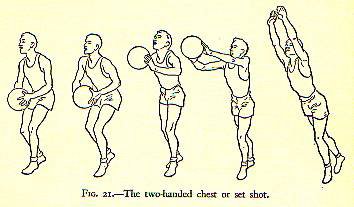
We named this site "setshot" to reflect the repertoire of the player that's just too old and broken down to jump or drive the lane anymore. For me, the name also conjures up my dad and his old-fashioned moves. And that conjures up an era when the set shot dominated basketball. Jeff and I don't go back that far, of course, (we're aging, not old) but the game has changed in many ways since our childhood. So, to celebrate our diminishing abilities and our years of hoops love, I offer you a mini-clinic on the set shot.

In seventh grade, I felt honored when my coach chose me to read an article on the set shot by Pistol Pete Maravich and then teach my fellow players how to do it. I only realized later that this was his subtle way of correcting my unorthodox elbow-akimbo shooting style.
An inspiration to aging hoopsters, Maravich died on the court at age 40. After, a pick up game with Focus on the Family's James Dobson, he said, "Let's do this again, I feel great." He then collapsed and died of a heart attack.


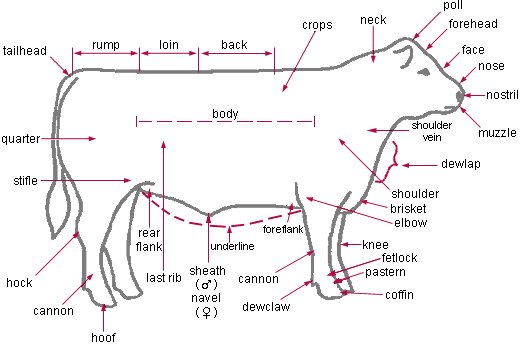
Back to the set shot, first, don't shoot like the old-timer at the top of the page--his form looks terrible--he's shooting with both hands and leaning forward crazily as he takes the shot. Second, you could try the BEEF method. Jason Rogers suggests that the coach should have some beef on hand for the lesson "or something that looks like beef (a large picture of a cow would be a good prop!)". After showing the prop, the coach should initiate a discussion about beef. "Ask students if they think that "beef" has anything to do with basketball? Anything to do with shooting a set shot? (The answer should be "no")." The coach then asks the students to list all the elements of a good set shot on the bulletin board. The coach then singles out the four responses that spell BEEF--Balance, Eyes, Elbow, and Follow-through. If only my coach had brought some beef to the gym--my stomach wouldn't have grumbled so much during wind sprints and I'd hold the NBA three-point title--though three-pointers didn't exist back then.

Coaches Clipboard has a very good page on the set shot. I especially like the Form Shooting drill that they show in the video clip.
Start with shots directly in front of the basket, just a few feet away, to develop correct technique. Shooting further away does not allow the shooter to focus on this repeatable form. Do this drill for just 5 minutes every day. Even experienced good shooters who are going through a "shooting slump" find this drill helpful in restoring their shooting mechanics and confidence.


Finally, 81-year-old Ken Lindsay's excellent Guide to Coaching Basketball also has a good page on shots of all types (and many other things), including the two-handed set shot--"This shot is hardly used by modern-day players; however, Bob McDermott, the best shooter I ever saw used it with great success. Therefore, it is described here because I feel it is the most accurate shot from long range." McDermott, who played in the 1930s and 1940s with the Fort Wayne Zollner Pistons, could hit reliably from anywhere inside half court--a skill he used to spread the zone offenses of his time. The one-handed set shot and the running one-handed shot were invented around the same time by Hank Luisetti of Stanford and then the Phillips 66ers and St. Mary’s Pre-Flight of the AAU (the ubiquity of the set shot evidently prevented them from calling themselves "Air" anything). Luisetti was named the second best player of the first half century behind George Mikan.

Saturday, October 29, 2005

Drills: Hand-eye coordination


If you're jonesing for some buckets but you're stuck at work you're in luck--Slime Dunk Basketball.

This is your chance to settle the score between Argentina and Belgium (Manu Ginobili vs. Tony Parker).

The game is a little confusing. You lose a point every time that you get "pinged for goal tending"--but this actually appears to be something like a three-second violation. You can't be in the marked area under the basket for more than the allowed time.

I don't think I'm coordinated enough or patient enough to play it, but I think I would be willing to learn if Jeff challenged me. Maybe I'd have a chance in Slimeland--though I doubt it. Or maybe my wife will play me. It will give her a break from kicking my ass in foosball.

Saturday, October 08, 2005

Equipment: Old baller aids

Sometimes aging hoopsters have no choice but to resort to artificial means.

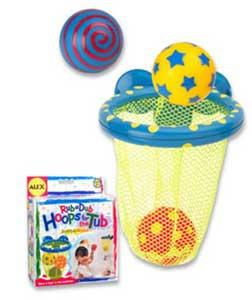
Having trouble with your set shot? Integrate fifteen minutes of shooting practice into your morning with Rub-a-Dub Hoops. Or into your commute with pickup hoops. Need help with your dribbling? The Rock Handle. Not quite as tall as you used to be? Inserts, man!