Showing posts with label culture and style. Show all posts

Tuesday, May 10, 2011

Psychology: Self-interest versus collective good

My last post was about how normative practices (such as how players "get next") affect game conditions. I tried to make the point that local rules and norms in pickup basketball profoundly shape the experience of playing.

Thinking about this further, I realized that the specific issue of "next" actually signifies a larger tensionthat between self-interest and collective good. Skilled players who advocate a system of next in which captains can cherry-pick their teammates are acting selfishly because under this system, these good players will tend to end up on strong teams and will get to play longer by winning more. Average and bad players, of course, suffer under this system.

There are many pickup scenarios that highlight this tension. Here's one. Have you ever played in a game where one player made a few ticky-tack foul calls? What tends to happen? That's right, everybody starts calling more fouls! So here, Sensitive Foul Guy's behavior shifts the culture of the game. If others don't react by lowering their foul calling tolerances, then Sensitive Foul Guy has created an unfair advantage for him and his team. Of course, this dynamic almost always leads to a series of "That was a foul! That was not a foul!" arguments that threaten to derail the entire run. Increasing foul sensitivity is a great example of the "tragedy of the commons," where everyone would benefit from playing with reasonable fouling standards, but individual players' self-interests undermine this collective goal and ruin it for everyone.

Here's another, less common example. Lately in my pickup run we've had an organizational problem. When the run is especially busy, players like to get two full games going, with winners playing winners and losers playing losers in a "second round." Sounds good, what's the problem? The problem is that this system cannot accommodate new players. So what happens is that the first round games end and teams switch courts to play the second round. But new players invariably show up during the first round and wait by one of the courts. When the second round games are supposed to start, there is almost always a fight between the new players and the players coming over from the other court to play their second round opponent. (This system is stupid but it sounds cool to a lot of people. They need to get their f*cking heads checked.)

The personal interests of the players are clear: everyone wants to play as soon as possible. But multiple teams, according to completely different logics, have the "right" to play. Who capitulates? I DO. As one of the oldest players (and the only professor) playing in a college gym, I feel a responsibility to set a good example, so when I am caught in this situation, I calmly explain why the tourney system makes no sense, and then offer to wait. My teammates are not always happy about this, but I give them my speech about self-interest and collective good and they generally seem to be somewhat sorta kinda ok with it. What strikes me is the reaction of other players, who are braced for an argument and surprised that someone would willingly sacrifice his own playing time. Last week I did this very thing and a player on the team that was jumping us looked at me with genuine puzzlement and said "Wow, you're so nice." I explained to him that I was not being nice, but rather acting in a way that set a positive example so that we would all eventually benefit. I asked that next time he was caught in a situation like the one we were in, he volunteer to sit and wait. He furrowed his brow and appeared to consider it before checking the ball in and starting play. Baby steps I guess.

Final example. The other day I was ahead of the entire defense on a break. My teammate threw me a great over-the-top pass and I had a clear path to the rim. But as I caught the ball my feet got mixed up and I shuffled slightly before taking two big steps and laying the ball in. I think it looked a little funny, but no one on the other team said anything because it was a marginal situation. I turned right to my opponents and said "I traveled. No basket." They were shocked. My teammates were shocked. In response I simply said "integrity of the game."

I hope that by setting a good example I will encourage others to think of the collective before thinking of themselves. I want to create a culture in which personal sacrifice is normalized, where players are willing to act against their own interests when they recognize that the collective good is at stake. I often talk to other respected regulars about this. I tell them that we all need to think of the good of the game before we think about ourselves. But this is difficult in pickup basketballa loosely organized activity with an ever-changing roster of participants. The problem with asking players to attend to the collective is that the collective is amorphous and unbounded. Still, I feel that if the most respected players actively promote honorable behavior, others will be inclined to follow suit. The players I talk to seem to understand this in theory, but when there's a three game wait next Sunday afternoon, we'll see.

I'll close with some simple but powerful advice. When faced with a self/collective dilemma, we should always ask ourselves: What would Jesus Shuttlesworth do?

Wednesday, April 27, 2011

The science of next

Ok, let's get a little social sciency up in here. I want to discuss something I've thought about for a long time: How does the process of "getting next" affect the dynamics of a pickup game? I've played in a lot of different games with various ways of doing this, but I think that there are two main procedures in the U.S.

Through democratic selection. The next five players to show up get next game, regardless of who they are. In general, those who have been waiting the longest are the next to play. If there are fewer than five players waiting, losing players engage in a shooting contest to fill the available spots. This is the most common form of next.

Through conferred authority. The next player to arrive becomes team captain. The captain has the liberty to accept or reject other players who ask to play with him. If the captain wishes, he can even select players from the losing team to join his squad, despite the fact that they are "jumping over" players who have not yet played. This is a less common arrangement, and I've mostly seen it practiced on the east coast.

Now I'm going to argue that the conferred authority method is worse on all counts. For years in Boston and New York, I played in games that used the conferred authority method, and it never made sense to me. Why not?

1. It lacks consistent internal logic. This method causes massive confusion. Who has next? Can I play with you? Why not? If I can't play next, can I play with the team waiting second next? Third next? Where is my place in the queue of nexts? At its worst, the conferred authority approach can produce a long string of captains with no teammates, each waiting to cherry pick the best players from losing squads. When games get crowded, the system's vague logic and players' intense desires to play spark a conflagration of arguing.

2. It unfairly stacks teams. This method eventually creates extreme team inequalities. Next teams are invariably getting stronger and stronger because they are selecting the best available players. Weak players, meanwhile, are being sent to the back of the line. When these weaker teams finally make it onto the court, they are quickly dispatched by the high quality team that currently owns the run. Ultimately, the weak players leave because they keep losing and then they have to wait an hour to play again.

3. It changes the culture of the game. Winning becomes the primary goal of playing. This is because the conferred authority method essentially changes the game's supply and demand of players. Since some players are in more demand than others, the likelihood of playing after losing is variable across players. Those who do not expect to be picked up by a next team must win to keep playing, or they will be subject to the humiliation (and long wait) of finding a spot amongst the sea of nexts. The need to win is a direct reflection of self-interest, which runs rampant under this system. Average/bad players who do not advocate for themselves will not play very often. (Good players will get picked up again no matter what their personality.) Thus, all average players must seek above average teammates to increase the chances of victory, and at the same time, above average players seek to avoid playing with the average players.

4. It encourages shady behavior. For all the reasons described above, players (especially captains) must use deceptive tactics to keep their teams strong and avoid relegation to "last next." This usually involves dissuading or refusing subpar players who ask to play. The most common form of shady behavior is when a waiting captain targets a star player who is currently playing and holds a spot for that player, even though others are coming up and asking to play. Again, this is technically allowed, but it just seems unethical. Many times, I'd approach a waiting captain and ask to play, only to be told that "his friend was in the bathroom." Of course, when the next game started, the "friend" turned out to be a star player who just lost. When shady behavior is built into the norms of the game, the norms of the game should be questioned.

Overall, the conferred authority method produces more competitive games, but also more stress, conflict, and unhappiness among players. I also feel that it compromises the integrity of the pickup game because it is so profoundly undemocratic. The larger point here is that the structural conditions of play can exert significant effects on who plays, how the game is played, and how players relate to the experience of playing. The conferred authority approach leads to a competitive environment structured rigidly around a hierarchy of skill. On the other hand, the democratic method mitigates this hierarchy and fosters a fair-minded approach to the game where playing time is freely available, regardless of how good you are.

Wednesday, January 27, 2010

Glory: Too old to celebrate?

Last night we were having a great pickup session at the university gym. I was on a team with some good players and we had won two games in a row. A couple of guys I had never seen before assembled a team to play next. They were both wearing shirts indicating that they had played college football, and they both looked like college football playersthick, strong, athletic. They also seemed kinda mean. They didn't interact with other players in the gym and exuded an air of ruthless, cutthroat competitiveness. Now I know that in America, we celebrate this attitude. "Kobe is an assassin." "MJ will rip your heart out and eat it." But the culture of pickup at our gym is one of intense but friendly competition. Most everyone plays to win, but it's a fairly close-knit group and there is a lot of mutual respect and admiration.

As we started to play, I immediately found myself hating the football players. They were really surly and griped about everything
fouls, traveling, out of boundsI think you know this type. They didn't appear to be having any fun. Unfortunately, I was guarding the "smaller" of the two and he was killing me. Three pointer in my eye. Surreal, hanging layup in traffic . . . and one. Ankle-breaking crossover leaving me in the dust. At one point, I fouled him and offered him possession. He grabbed the ball, shot me a nasty look, and walked away without saying a word. I was feeling really bad about myself (and absolutely despising him), but at the same time, my competitive instincts were kicking in. I did not want to lose to these guys. I knew that if we lost, I'd spend the whole night thinking about it, simmering in my frustration.

We play games to nine straight by ones and twos. I know that this is stupid, but it's part of the culture. I'd like to change the scoring system to twos and threes, but I think that math education has gotten so bad in this country that many people are incapable of counting in such large increments.

The score was 8-7 them (i.e., they could hit any basket to win but we needed a three-pointer). My man had scored five of their eight
. I had only scored once, although I had assisted on three or four other baskets. The ball was inbounded to me and I started racing up the court ahead of my teammates. Often I will do this to draw the attention of the defense, allowing a trailing teammate an open cut to the hoop, whereupon I will drop an easy dime. But this time I was intent on shooting. Not only did I want our team to win, I wanted my man to feel the sting of the loss most acutely. As I came across halfcourt the entire defense sagged back. Without hesitation, I pulled the trigger on a long three and drained it, winning the game.

I freaked out
in both triumph and relief. I turned and ran down the court, arms raised, yelling "WHAT?! WHAT?!" as if in disbelief. It felt amazing. I saw the guy I was guarding flop against the bleachers and throw a towel over his head. My teammates and I exchanged hi-fives as we strolled to the water fountain. At that moment, I felt that my night had been made, that I would sleep soundly replaying the sweet swish of that last shot in my dreams.

But soon after I started to feel bad. Had I acted in an unsportsmanlike manner? If the football players had won, I bet they would have walked off in smug silence, without explicitly rubbing our faces in it. The knowledge that they had beaten us would have been enough. Why did I feel the need to twist the knife? And aren't I too old to be hooting like a teenager? As the only faculty member who plays regularly, I should be trying to set a good example. To make it worse, two players on the other team were people that I really like
including the best female player in the gym. Do they think less of me because of my outburst? Clearly, it wasn't about them, but they had also endured the loss.

I think that one reason I felt so guilty about my actions is that they were deeply reflective of my insecurities about aging. As much as I have worked to accept the deterioration of my game, I still find it hard to lose to young, arrogant players. I guess I want them to know that they, too, will get old and that one day, there will be even younger players seeking to humiliate them. But with my friends, I'm frequently talking about those who play honorably and those who do not, and even though the initial adrenaline rush of that game-winner was awesome, in retrospect my post-shot behavior did not seem particularly honorable.

Monday, November 24, 2008

Setshot in the Chicago Tribune!

Well, we've finally made the big time. Setshot was interviewed by the Chicago Tribune about the significance of Barack Obama's love of pickup basketball. We are described as a "slightly tongue-in-cheek blog."

The article can be found here.

Saturday, February 04, 2006

Video games: What to do when injured


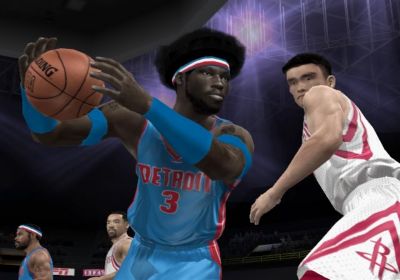
The last several months I've been on the DL from playing basketball due to plantar's fascitis. Unfortunately the only way to get my hoops fix has been from offering up lousy trades in fantasy sports and more importantly, bball video games. It leads to the natural topic for my fellow setshotters: What are the best hoops video games of all time?

My vote would go to NBA Jams, which cemented the phrase "he's on fire" into NBA lexicon forever as players like Jeff Hornacek and Charles Oakley did 720 dunks after making several shots in a row. Justin and I once had a good season of NBA 2K3 where I was inexplicably able to score 23 a game with Celtics reserve Eric Williams. Double Dribble was the best game for the Nintendo, even though there were certain spots on the floor where players would shoot 100% from 3-point land.

There's a couple of games that were fantastic in their day that get slept on: Arch Rivals, the original Atari video game that featured two stick figures walking back and forth and shooting on a two dimensional straight line representing the "hoop", and of course the classic Jordan vs. Bird, where an irate Janitor would come clean the floor and admonish MJ or Larry after shattering the backboard with a ferocious dunk.

Fellow Setshotters, what are your favorite hoops video games, and why?

Sunday, January 29, 2006

Fashion: Posing for the team photo


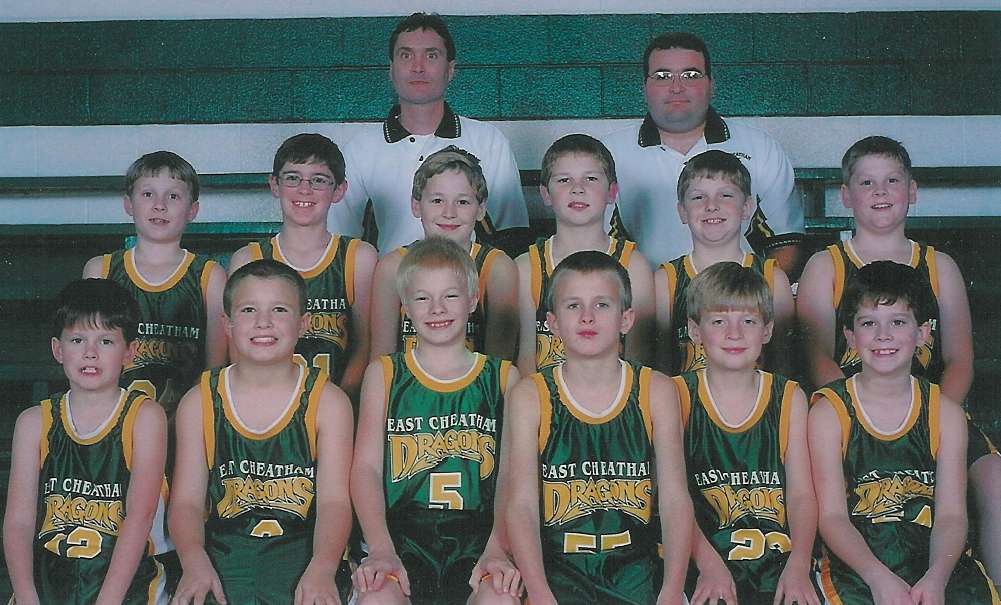
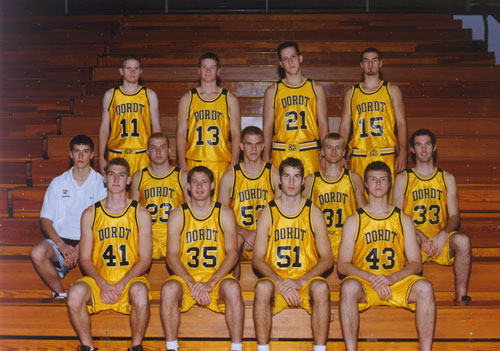
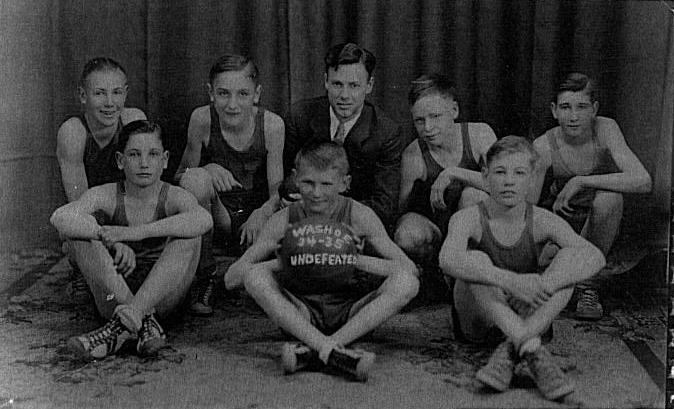
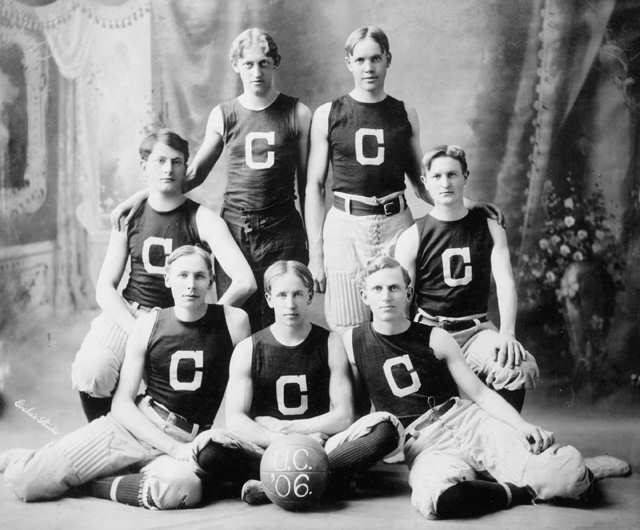
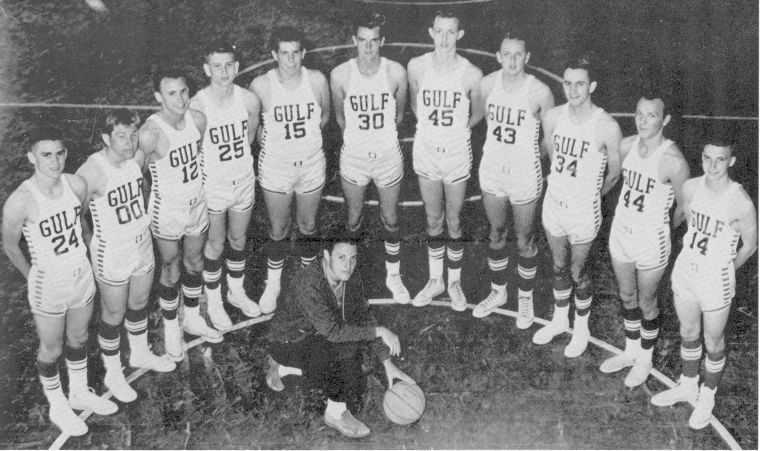
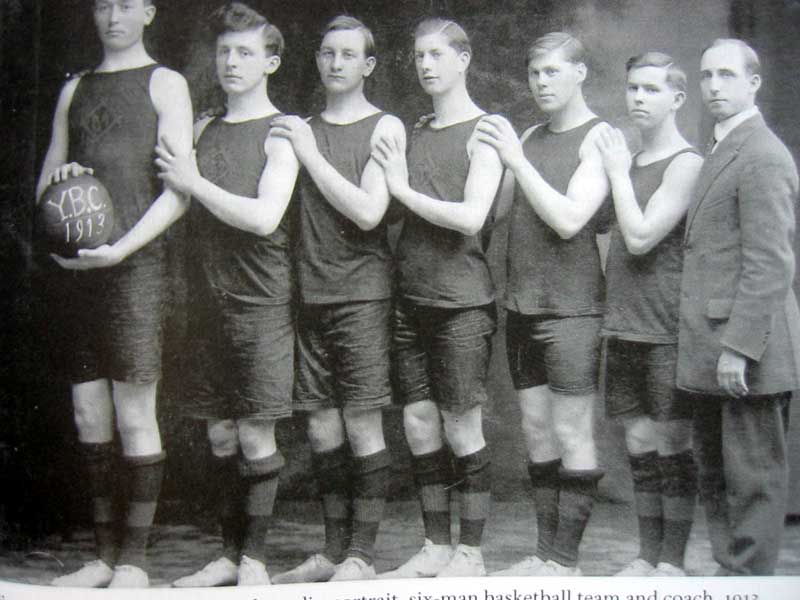
The other day somebody ended up at Setshot after searching for "how to pose teams for a team photo". I'm sure they ended up disappointed. So I figured I might as well try to address their question.

After an unscientific image search on Google, I found that the most common pose was the front-facing two-row, though this also had its one-row, three-row, and four-row variants. The single-row could also be performed in profile.


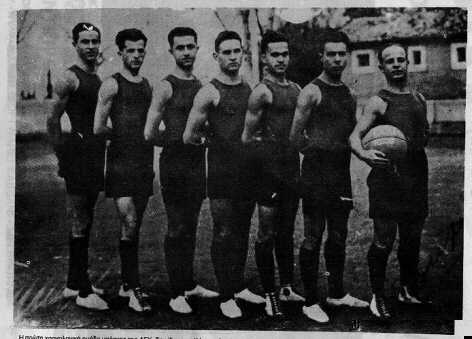
More interesting poses (most from olden times) included "the indian-style" "the circle", "the semi-circle", the "I for Idaho", "the streetclothes", "the lunch line" and "the stairstep".


Finally, John Ibson in "Picturing Men" argues that displays of male affection in team photos have become more taboo over the course of the twentieth century. As examples, he provides "the bicep clutch" and "the pile" from the turn of the century.

Wednesday, January 18, 2006

Culture: Hoops Hits


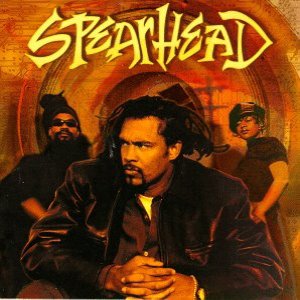
The other day I was hooked up to my ipod and doing the elliptical trainer dance at the local Y when endorphins caused me to wonder what the best basketball songs are. The only songs that came to mind were the Michigan State fight song and Spearhead's "Why O Why" from Chocolate Supa Highway. I always liked that song because one line made me imagine that it was about Bergen St. in downtown Brooklyn where a bunch of us used to play--"all day to be more specific, east to west from Atlantic to Pacific". I just found out that Michael Franti (who is 6'6") played for the University of San Francisco Dons. I'd like to see him take on Prince. Other favorite songs?


Why O Why
I say my prayers every morning just like orange juice
I crack the crinkles out my body till I'm feeling loose
I strap my sneakers on my feet like they was combat boots
they fit my feet like Cinderella when I'm shooting hoops
Why oh why do memories keep chasing me
sometimes it makes me wanna grab my shit and flee
sometimes I wanna blow my brains to put my life at ease
but I ain't clocking out I gotta see the seven seas
please seven's a very lucky number for me
that was the age when I discovered how good balling could be
up every morning with the birdies doing little drills go to my
left go
to my right developing mad skills
how could a love for this game bring so much sadness
I played with brothas with so much badness
but now they gone I sing a song
pop a three from the top of the key in they memory

(Chorus)
Why oh Why do memories be chasing me
sometimes it makes me wanna grab my shit and flee
even in seasons when it's another color sport
I still be memorizing lines out on the basketball court
singing Why oh Why do memories be chasing me
sometimes it makes me wanna grab my shit and flee
even in seasons when it's another color sport
I be remembering my partners on the basketball court

Do you remember runnin' the court in September
me and my homies be down for whoever
would come along and try to send us to the showers
from the game that we'd been dominating' there for hours
all day to be more specific
east to west from Atlantic to Pacific
fools would come round to get down
and try to take our crown
but we would hold our ground and we would never back down
old timers new timers would get in line there
and take a seat there and try to prepare
but oh no! there was no chance when we was in the zone
we was alone at the top we had hops we got props
and when we needed to we busted chops
wipe the court with your game like we was using mops
whatever happened to the super hoopers
in the park I reminisce while shootin' solitary after dark

(Chorus)

Brother C came fresh from out of town and
he had handles and like McDonald's he could clown ya
dribbling baby bounces between drinking forty ounces
knock ya on your heels and do circles like he was Curly Neal
but oh no, the liquor got quicker to his head and he said
"I think I musta placed some stupid bets"
he hit me up for some cash there was a car crash
a splash and then the brother made a mad dash
Rob oh Rob his whole life was like a roller coaster
but on the court he looked like a Dr. J poster
flying high with an Afro blowing in the wind
wiping Windex, index finger rolls
off the glass then swish through the net
jump a Corvette with a triple pirouette
but off the court he had a few temptations
copulations no moderations by 24 he had 3 pregnations
last check crack intoxications
so many other brothers gone from this dimension
and none of those who got hurt receive a pension
give a Bup! Bup! to those locked up in detention
memories too many dimension
and we say, one more time...one more time

(Chorus)

Friday, November 25, 2005

Style: Best hoops haircuts


We tend to take our hair for granted when we're young. We can do whatever we want with it. Grow it long. Shave it off. Shave some of it off. But aging takes its toll on our coiffability. Many of us start losing our hair. We go gray. Our fine, gleaming locks become bristly and stiff.

So while we still have some left, let's talk about the coolest hoops hairstyles. My favorite ever was on an asian kid I used to play with in Boston. His hair was cut marine-short all over, except for his bangs, which grew down to his chin. This wouldn't have been that remarkable except that he always rebounded one-handed, which made his bangs fly all over the place in a really neat way. I attempted this hairstyle myself for a while, but my head is too oval and I looked stupid. Plus, I rebound with two hands.

There was another white guy I knew who had a big curly afro. Again, no big deal, except that he always came to the gym in a full 1970s-style Lakers uniform, complete with short shorts and striped socks. This dude looked like he'd been time-warped straight from Walt Frazier's corporate basketball camp. He even played like he was from the 70s, with a straight up-and-down dribble and a two-handed quasi-set shot. And, he was awesome!

Setshotters: Share your favorite hairstyles here.

Sunday, November 20, 2005

Tips: What would Jesus do?


The crazy kids of Global Mission Church in Silver Spring, Maryland suggest another way of improving your vertical jump.

Click "more" for comments only.

Friday, November 04, 2005

Tips: Best hoops reading

As we get older and less able to play, we have to find different ways to stay engaged with the game. I'm always looking for good basketball books, so I thought I'd start a thread where folks can post up their favorites. Here are some of mine.

1. My favorite basketball book ever is Playing for Keeps by David Halberstam, which is about Michael Jordan. Halberstam is a big-time historian, and he provides a fantastic level of detail. The running theme of Playing for Keeps is that the cause, and price, of Jordan's success was basically a pathological need to win. This is not news, but there are some great stories around this theme, like when Jordan cheats at a game of Old Maid with his college roommate and his roommate's grandma. ("Did you just cheat my grandma in Old Maid?") The sections about Larry Bird and Isiah Thomas are also really fun to read.

2. Another good one is The Last Shot by Darcy Frey. This one follows the Lincoln High (Coney Island) basketball team around in the early 1990s, and focuses on the twisted process of college recruiting. A bratty 14-year old Stephon Marbury makes some extended cameo appearances, the first of which has him rolling into Coney Island's famous "Garden" basketball court on a Big Wheel.

3. I also loved The Last Season by Phil Jackson, mostly for the Kobe-Shaq gossip. Jackson does his best to handle the Bryant sex scandal delicately, but in reading between the lines, it looks to me like Jackson's saying: "I think Kobe raped her."

4. I'm right in the middle of The Jump by Ian O'Connor -- the new one about Sebastian Telfair. Telfair gets treated pretty gently (this is the price of total access), but the high school/NCAA/NBA exploitation machine does not. Some good Marbury-bashing in this one as well. I find it riveting.

Ok Setshotters, share and review your favorite books here!


Saturday, October 08, 2005

Relationships: Can we just not be friends?


Basketball relationships are funny. You can play with someone all the time and have absolutely no idea what they do for a job, where they are from, or even their real name.Every week, you cruise into the gym, slap the same hands, and say the same thing: "Yo, Johnny, Stretch, White Shaq, what's up? You got the next one? Can I get on?" Meanwhile, Johnny just came from his shift at the soda factory, Stretch spent the morning grading astrophysics exams, and Shaq had to get up early to do a porno shoot. You don't know any of this, and have little desire to find out. Then, the next time you're watching amputee dwarf porn on pay-per-view, there's that dude from the gym plowing some screaming, armless midget.

Don't get me wrong. I've made a lot of real friends over the years through basketball. But there are countless others that have come and gone. I think this is true for most of us. You play with a person all the time, and then one day they've just disappeared. Other times, you're the one who leaves. What do you do? Go to the gym in street clothes and say goodbye to everyone? But on any given day, only some of your hoops buddies will be playing. How many times do you have to go? And do you even pretend that you're gonna stay in touch? No offense, but if you think that I'm gonna be friends with some creepy fetish porn actor, you've got another thing coming.

Setshotters: Any wisdom to share here? Similar experiences? Exit strategies?

Monday, October 03, 2005

Players: Famous people you've hooped with

One thing that aging ballers love to do is tell stories about famous players they've played with or against. When I was in college at Northeastern U. in Boston, there was a lot of reminiscing from the older players about Reggie Lewis, who allegedly used to dominate the pickup games at the gym. The best player I ever played with at NU was Wayne Turner (from Kentucky, and briefly, the NBA). He was a native Bostonian who would occasionally come to the gym and crush everyone. It's good to play with guys on that level once in a while, as it really puts you in your place basketball-wise. Turner was not just an amazing player; he actually seemed like a different species of human from the rest of us, able to do things that our bodies could not even conceive of, and capable of exploiting impossibly small gaps in the defense.

But my favorite famous-person-that-I've-played-with is Ira Glasser - the long-time director of the ACLU, now retired. Glasser was well known for playing in the pickup games at NYU, and I would see him at the gym all the time when I was procrastinating grad school work. He was friendly with everyone, and could always be found playing 3-on-3. He was/is actually a pretty good player, with a reliable set shot and keen passing skills. A truly dignified aging baller, he seemed to have adapted to the limitations of age and made full use of his remaining abilities. Seeing Glasser play, I always thought that I would want to be playing his kind of cerebral game when I reach my sixties.

Here is where you share your stories about famous people you've played with. You must say whether they were good or sucky.

Sunday, October 02, 2005

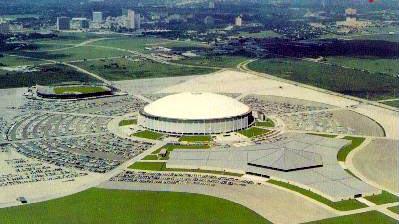
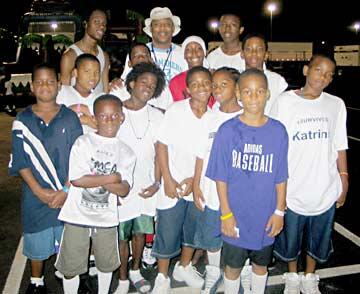
Courts: Katrina evacuees ball in the Astrodome parking lot


The New York Times reports that New Orleans' fabled pickup basketball scene has found a temporary home in the parking lot of the Houston Astrodome. Fifteen hoops have been set up. Previously, kids were shooting into trash cans.

Here is where you tell of the strangest, best or worst places that you've played.


Friday, September 30, 2005

History: The Greatest Pick-up Games


What is your greatest game? Mark Bazer offers a riveting account of his, featuring--Ball Hog, The Spaz, The Fat Kid Who Stands at the Three-Point Line All Game, The Guy Who Calls a Foul No Matter What, and The Girlfriend in Tight Jeans On the Sidelines.

Wednesday, September 28, 2005

Nicknames: Asian Nash vs. White Shaq

I wanted to start a thread where people could post the best nicknames they've heard on the court. Over the last few years, a lot of people have called me "Asian Steve Nash." It's totally nice, and I'm happy for the comparison, but it's a lot to live up to! ("Asian Zoran Plananic" is probably more accurate.) One consequence of this is that I've become infatuated with calling certain white players the White This or the White That. I particularly like calling big white guys "White Shaq" or, even better, "White Yao."

I used to call one of my NYU hoops buddies White Yao, until he got an even better nickname. My buddy is a thin 6'6" math professor who got his degree from UC Berkeley, so some kids at NYU started calling him "the Ivory Tower," which was so funny it made my genitals fall off.

There's this guy who plays at Ohlone Park who's got a great lean physique and always plays with his shirt off. A couple of weeks ago, we started calling him "Bowflex." Love that one.

And of course, there's Old School, which is classic!

What are your favorites?