Thursday, November 15, 2007

Better balling through chemistry: Glucosamine

I sometimes write about my frail-as-Kucinich ankles on this blog. Since a series of terrible injuries in my mid-20s, they've been really brittle and I've had to wear ankle braces to play. Earlier this year, I tore my achilles tendon, so things have been getting even messier down there.

A while back, a colleague of mine suggested taking glucosamine supplements. He also has brittle ankles and claimed that glucosamine had strengthened his joints and allowed him a greater range of athletic options. My mom also takes glucosamine for her arthritis and she swears by it.

So I decided to try it out and I have been taking two glucosamine pills every day for the past few months. I think it's working! My ankles have been feeling stronger and they don't "roll" as far as they used to. Unfortunately, age and lack of fitness have been taking their toll on my game and I'm still definitely on the decline, but my ankles are not getting as sore after games and I feel significantly more stable when I run and, um, "jump."

While it's a little weird to be discussing osteo-improvement with my mom, I'm really grateful that these little pills seem to be helping me prolong my playing days.

Setshotters, what are you taking to stay young(ish)? What about these steroids that everyone's always talking about? Can they help me?

Friday, June 08, 2007

What to do when injured: Homework!

I went on the DL in March with a torn achilles and since then, I've been looking for things to do to satisfy my hoops addiction. In a previous post, Cary suggested video games, and I've definitely had a little fun playing NBA2K7 on my rickety old Playstation2. I also spent a lot of time watching the NCAA tournament and the NBA playoffs.

Recently I read Mark Kriegel's biography of Pete Maravich, which was enjoyable to me in the same way that Us magazine is enjoyable to my wife. But the book discusses a series of instructional videos that Maravich made in the early 1980s called "Homework Basketball." I'd never heard of these before, so I decided to check youtube, which seems to have uploaded every video ever made by anyone.

What a revelation! Maravich is a great teacher of the game, which is not surprising considering his father's coaching prowess. (And he refers to his dad constantly in the clips.) The younger Maravich explains ideas clearly, and in describing various drills, rarely fails to note one or two little tricks that can dramatically improve performance. (Example: When throwing a behind-the-back pass, make sure your palm is "floppy" and pointing upwards.) With my busted wheel, I couldn't do a lot of the drills, but there were a number I could practice even while sitting on my couch in a cast, like:

This one on ball handling.


This one on shooting form.

I've actually adjusted the way I shoot based on one of the videos, rotating my hand clockwise about 10 degrees so my index finger sits in the center of the ball. (I've always shot with my middle finger in the center.) Wow. I thought I was too old to adjust my mechanics, but this minor change has really helped a lot. I've been going to the park and doing light shooting drills lately, and the Maravich method is definitely a lot more natural and smooth than my old way of shooting.

The funny thing is that the Homework Basketball videos were clearly made for kids learning to play ball, but I think that they can be useful for anyone who wants to get better. The youtube clips are all pretty short, but I learned something from every single one.

Do your homework!

Friday, June 01, 2007

Psychology: What does your game say about you as a person?

My last post was about a New York Times story describing Barack Obama's love of pickup basketball. The Times website also put up a great video interview with Craig Robinson, who is Obama's brother-in-law and coach of the Brown University men's basketball team. Robinson recalls how his sister Michelle, in considering Obama for husbandry, asked him to take Barack out to play basketball. Why? To find out what kind of person Obama really was.

Telling this story, Robinson reiterates a truth that almost all pickup ballers are aware of: "You can tell a lot about a guy by the way he plays basketball. You can tell if a guy is selfish. You can tell if a guy is phony. There's a lot of different ways on the court you can tell that."

Unsuprisingly, Robinson describes Obama as being humble, team-oriented and willing to admit mistakes, as evidenced by a readiness to call fouls on himself. (We'll see what the bro-in-law has to say after the campaign.)

Robinson's words really resonate with me. I feel that this principle is proven again and again on the asphalt and the hardwood. People who are jerks in real life act like jerks on the court (like this guy). People who are nice in real life are nice on the court. Self-centered people tend to ballhog, as they have trouble visualizing the game from other players' perspectives. The best point guards, I've found, are typically gregarious and thoughtful. And who plays dirty except people that live their lives dirty?

Of course, there are always exceptions. A guy that used to play regularly at the NYU gym was one of the most bitchy, complainy dudes I'd ever encountered, but when you saw him around campus, he was sweet as pie. Never could figure that one out.

But I'll stick to the position that there is an extremely high correlation between hoops personality and real-life personality.
Anyone else want to weigh in on this?

Barack Obama is a baller

Today's New York Times has a story about Barack Obama's lifelong relationship with basketball. Not only is he a dedicated pickup basketball player, it also sounds like he's got some game:

"Before Rickey Green, a former NBA all-star, played with Mr. Obama in a 2004 Senate campaign fund-raiser, 'I didn’t think he could play at all, to be honest with you,' Mr. Green said. But 'he’s above average,' for a pickup player, Mr. Green said. 'He’s got a nice little left-hand shot and some knowledge of the game.' ”

He also has a penchant for talking trash:

“ 'If he would hit a couple buckets, he would let you know about it,' said Alexi Giannoulias, who played in the late 1990s with Mr. Obama at the East Bank Club, a luxurious spot in downtown Chicago."

Friends say that Obama doesn't have much time for the game these days, but they, uh, have a dream:

"The solution, Mr. Obama’s friends say, is for him to win the presidency, so they can all play together at the White House. 'I always tease him about that,' Mr. Nesbitt said. 'If you win, you gotta have a hoop.' "

Well, that cinches it. Setshot officially endorses Barack Obama for president.


**UPDATE**

Here's some old footage of Obama playing ball on his high school team. Not bad!

And here he is draining a three in shirtsleeves while on the campaign trail. <Swoon>

Wednesday, April 25, 2007

The Reckoning, or How My Body Betrayed Me

On March 2nd, I tore my achilles tendon playing ball. Short story shorter: loose ball, jump, land, POP. I was in the emergency room within an hour, where it took them about ten seconds to tell me that yep, I'd torn it. (The doctor-types call it a "rupture," which makes it sound like my leg had an earthquake.)

This is the worst injury I've ever had. I was in surgery six days after the injury, spent about four weeks in a cast and on crutches, and am now in the midst of a long recovery period. I won't run again until June, and can't play basketball until August-ish. When I tell people what happened to me, their initial reaction is typically something like, "Ouch. That must have really hurt." Well yeah, it did really hurt, but to be honest, the physical pain of the injury was much less severe than most ankle sprains. The psychological pain of it, both during and after, was the bigger issue for me.

More after the jump...

I knew what happened as soon as I felt the pop. When I grabbed my achilles, it felt like jelly. When I tried to stand up, it felt like I had a heel lift in my shoe--or like I was standing on tippy-toes. That messed me up. It's terrible to be fully aware of a such a serious bodily malfunction. I mean, one second I'm running and jumping, and the next I'm sitting on the floor, broken.

The period following surgery was really hard. Being on crutches sucks in so many ways. I had to think about everywhere I was going. Did I really need that banana from the kitchen? In addition, being on crutches makes it impossible to carry anything. If I needed a book from the study, I had to strap on my backpack, crutch to the study, put the book in the backpack, and crutch back to wherever I was. And don't even get me started about going up and down stairs.

Now, as I recover and can imagine a day when I'll play ball again, I'm having to seriously contemplate my future relationship with the game. I'm 32 right now, and my skills were already in decline before the injury, but this basically pushes me off the cliff of suckitude.

If you know me, you know that I am addicted to basketball and I regularly need to do hoops-related stuff to stay sane. I was able to start shooting free throws and do some non-mobile dribbling drills this past weekend, which felt great, like getting together with an old friend. The big question is of course: How good can I ever be again? The initial evidence has been unsettling. At the court this weekend, I played HORSE with a sorta-developmentally disabled kid. He beat me one game out of three.

Saturday, February 24, 2007

An old lady basketball league: HOT!


A recent story in the New York Times describes a "Granny Basketball League" that has been organized in Iowa. They play old-school rules: 6 on 6, no running or jumping, no physical contact, and a two dribble limit per possession. It seems like the participation requirements are pretty loose. Says a spokeswoman: “You don’t have to be a grandmother to play. You just have to be old.”

I'm having fantasies right now that are a cross between "Mrs. Doubtfire" and "Juwanna Man."

The GBL players all wear blouses, bloomers and striped socks, and the funniest league rule is that the refs call "flesh fouls" if a player reveals any part of her upper arm or upper leg. I'm all for the old school rules, but please let these fine honeys flash some skin! (XGBL anyone?)

You may be aware of my attraction to female ballers. At the present moment, I tend to be attracted to, uh, younger players. But that doesn't mean that someday I won't want to get down with that grandma with the sweet sweet crossover. Please ma'am, break my ankles.

Monday, April 10, 2006

Fantasies: Could you score on an NBA player on your home court?


The most popular Setshot post of all time considered the question above. A second post provided a quasi-empirical test. Now for another stab. I had always imagined my faceoff with Paul Shirley on some NBA court--say the Garden. The lights would be dimmed in the house, other players would be shooting around after practice, and I'd be shitting bricks about just stepping on to such hallowed hardwood.

But I recently came across some photos of Steve Nash playing pickup with some regular joes in Tribeca (also see the story referencing this and accompanied by some cheesy boudoir photos of Nash).

Eureka! What if Shirley came to my court? Surely, this would give me an edge of some sort? I could force him to dribble over that annoying crack in the pavement or choose the backboard that tilts at a 75 degree angle.

Are you with me?


Sunday, April 09, 2006

NBA: Your fave all time starting five


So, if all of you setshotters had to pick a starting five that you would love to watch play for an afternoon, (assuming all players are in the prime of their career), who would be on it? I would have to go with the following:

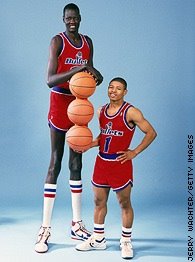
PG Muggsy Bogues
SG Earl Boykins
SF Michael Cooper (for the socks and the D)
PF Charles Barkley circa his days with the Sixers
C Manute Bol

Not much else to this post, but it'll be interesting to see who people come up with.


Tuesday, March 14, 2006

Psychology: cheap tricks in pickup games


Admittedly or not, each of us has some cheap tricks on the basketball court. A week ago I ran in a full court game where I had the misfortune of playing against this guy--more than likely some kind of triathlete--whose game was basically predicated on sprinting down the court after every made basket before the defense could get back, and cherry picking easy layups all evening. It was kind of legit, but pretty annoying all in all. Since the guy on my team assigned to guard him basically took the night off on D, I was left with the unenviable task of running wind sprints all night to prevent this.

As we advance in age, we need to make up for our lack of athleticism by doing whatever possible to get an edge. Jeff has devised an unstoppable move of simply turning around and around again until you finally bite on a head fake that allows him to shoot an easy layup. I like to grab jerseys and throw some 'bows every so often after grabbing rebounds, and sometimes my forearms do the talking when I get beat to the spot. So I ask fellow setshotters: What are the best (or worst) cheap gimmick moves you've seen people use to fight off the effects of diminishing athletic skills?

Sunday, February 26, 2006

NBA: Save the Knickerbockers


Man, what's going on with the Knicks? It was only a few years ago that they were an intimidating defensive stalwart holding opponents to low scores and thugging their way to the top of the Atlantic Division. Last night their new vaunted backcourt of Marbury and Stevie Franchise gave up 46 points to Gilbert Arenas....in 3 quarters! Although I've never been a huge Knicks fan, I do pine for the days when they were a force in the east, and their rivalries with Miami and Indiana made the NBA fun to watch. That organization is a mess, and most people are pointing fingers at Isiah Thomas and the Knicks top brass. My question to my fellow Setshotters is if you were the GM of the Knicks, how would you start to clean up the mess...

...given that many of the squads draft picks have been mortgaged away, and high-rent, long-term contracts for players like Jerome James are keeping you at the salary cap limit. To make matters worse, New York fans and media are too impatient to rebuild, thus perpetuating the cycle of trading away your future players for overpriced aging talent. Where do you begin? And I wonder if somehow we can get Woody or Soon Yi to chime in on this one? Should the Knicks turn to the IMF for help?

Tuesday, February 21, 2006

NBA: New Ideas for All-Star Week


Let's face it. NBA All-Star weekend has gotten pretty boring. That skills thing is silly, and the dunk contest has basically become an excuse to show candid shots of P-Diddy, AI, and Dirk clowning around for an hour with Eva Longoria looking impressed on the sideline. It seems like it's time to gets some new, creative events out there for All-Star weekend.

Jeff suggested the excellent idea of a game of horse between NBA stars, although in his typical modesty he attributed the idea to someone else. I think maybe a 2-on-2 game featuring teammates might be fun to watch. I would like to see what our readers think would be some good new events to liven things up...

Monday, February 13, 2006

Careers: Playing for peace

UConn hoops fanatic and friend of Setshot Suzanne referred us to this organization. "Playing for Peace" is a non-profit agency that bridges social divides, develops future leaders, and educates kids through basketball. Their modus operandi appears to be getting kids from opposing social and political groups to play ball together: white kids and black kids in South Africa, Catholics and Protestants in Northern Ireland, Israelis and Palestinians in the Middle East.

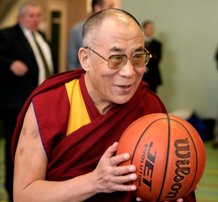
It looks like they're getting some good publicity. Steve Kerr is an advocate, and the Dalai Lama (pictured) is reported to have been breaking ankles and backboards at a recent exhibition, earning the streetball nicknames "Monky Business" and "Transcendental Conflagration." (Ok, I made those up.)

Playing for Peace has a bunch of interesting-looking job opportunities at its various sites. It could be a good way for the aging baller to prolong his involvement in the game while doing good in the world.


Tuesday, February 07, 2006

Psychology: Your greatest hoops moments


After several months of being on the shelf with plantar fascitis, I finally played some three on three pickup ball at USF's Koret Center. I don't know what happened. My team won several games in a row, despite our obvious physical shortcomings--both my teammates were well over 50, all of us were balding, and two of us were under 5'8. The guy guarding me, a bratty looking undergrad who saw me hobbling and wasn't taking me seriously at all, started talking smack and challenging me to shoot, which I did...

...I hit about 4 in a row, slicing through the lane like a slow, gimpy Steve Nash, later dishing to open shooters for treys or scoring on dribble penetrations and once on a hop-step move. I even knocked down some treys in the dude's face directly after he had been challenging me. I wanted to shout "whaaaaaaaat!!!!!!" but fortunately reason got the better of me. Maybe it was just the fun of playing for the first time in so long now that every game might be my last, but it was one my greatest pickup hoops moments of all time.

I now ask the good members of Setshot a simple question: What are some of your greatest moments playing pickup ball?


Saturday, February 04, 2006

Video games: What to do when injured


The last several months I've been on the DL from playing basketball due to plantar's fascitis. Unfortunately the only way to get my hoops fix has been from offering up lousy trades in fantasy sports and more importantly, bball video games. It leads to the natural topic for my fellow setshotters: What are the best hoops video games of all time?
My vote would go to NBA Jams, which cemented the phrase "he's on fire" into NBA lexicon forever as players like Jeff Hornacek and Charles Oakley did 720 dunks after making several shots in a row. Justin and I once had a good season of NBA 2K3 where I was inexplicably able to score 23 a game with Celtics reserve Eric Williams. Double Dribble was the best game for the Nintendo, even though there were certain spots on the floor where players would shoot 100% from 3-point land.

There's a couple of games that were fantastic in their day that get slept on: Arch Rivals, the original Atari video game that featured two stick figures walking back and forth and shooting on a two dimensional straight line representing the "hoop", and of course the classic Jordan vs. Bird, where an irate Janitor would come clean the floor and admonish MJ or Larry after shattering the backboard with a ferocious dunk.

Fellow Setshotters, what are your favorite hoops video games, and why?

Monday, January 30, 2006

Race: "Such a natural team leader..."


The other day at the gym I overheard a conversation about lilly-white Duke guard J.J. Redick, where a Caucasian man remarked that "...even though Redick is slow and can't dribble, (blah blah college team) tried everything to stop his 3-point shot, and they even put an athletic black guard on him, nobody could stop him...". After cringing, it brought up a lot of questions in my mind about the language of sports fans and journalism.

Among fans, even among well-meaning fans and commentators who mean no harm, there are a lot of troublesome examples of coded language in sports coverage, especially with the rise of ESPN, 24 hour sports business coverage from white guys in Armani suits, stats sports tickers, and most notably, fantasy sports, where everyday people simulate ownership of sports players and act as a fantasy GM of a sports team managing a fantasy roster of mostly black players.


White players coming into the league are almost invariably compared to Bird, regardless of their game. Yahoo!’s fantasy sports page features "The Big Board"” ranking players from 1-50 based on their statistical performance, mostly African-American players reduced to pure commodities ranked and evaluated somewhat like slaves on an auction block. In some fantasy sports leagues, players are drafted by auction, where owners ‘bid’ for the right to own the statistical production of athletes. When most of these athletes are African-American, is this a modern-day virtual slave auction going on?

In a recent conversation with Jeff, I was particularly critical of Ron Artest, whose recent shenanigans seriously damaged what could have been a very dangerous Indiana Pacers team. Jeff pointed out rightly that out that while Artest's actions breaking team rules by publicly demanding a trade and betraying his team were deplorable, it is common to hear the silent but racist language that insists that African-American athletes like Artest should shut up and be grateful for the huge piece of the pie they are given, even though it pales in comparison to that enormous reserves of almost exclusively Caucasian team owners who profit enormously from the labor of these athletes.

NBA players like Rasheed Wallace and Jermaine O' Neal have made attempts to publicly compare their situation to the situation of very well paid slaves and commodities, and the NBA, led by David Stern, has put the clamps down quickly on the dialogue. The NBA's recent dress code certainly smacks of trying to “whiten up the league" a bit. Phil Jackson, in his book The Last Season also quipped about Wallace that someone being paid $17 million dollars a year to play basketball and stay in four-star hotels has little basis to complain about being treated like a slave.

What are some other examples of racist codes in sports? Are the actions of African-American athletes problematized more than their Caucasian team owners in media? Are fantasy sports lovers unwittingly corroborating in a virtual dialogue revolving around racist notions of ownership? Is the notion of team really deteriorating in sports? Or is that just another code to justify playa hating African-American NBA stars who can do what normal slobs in offices can't?

I welcome the feedback of those wiser than I...

Sunday, January 29, 2006

Fashion: Posing for the team photo


The other day somebody ended up at Setshot after searching for "how to pose teams for a team photo". I'm sure they ended up disappointed. So I figured I might as well try to address their question.

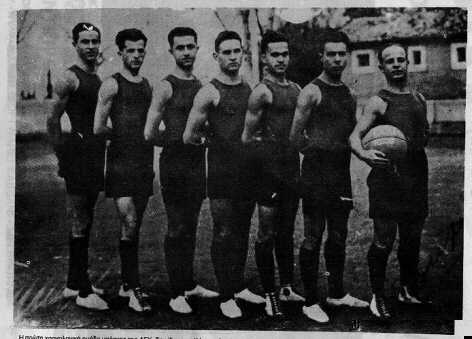
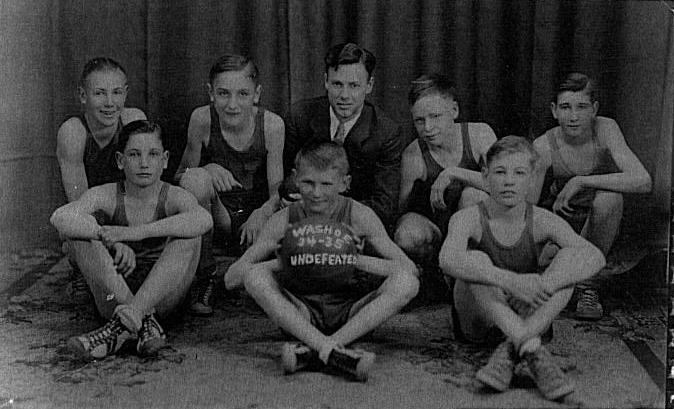
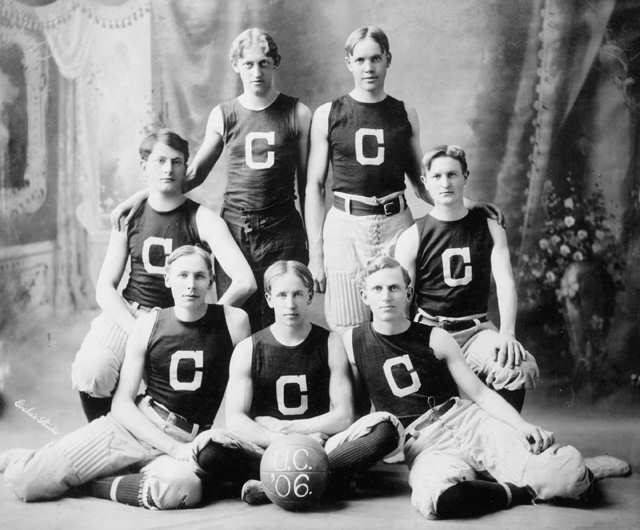
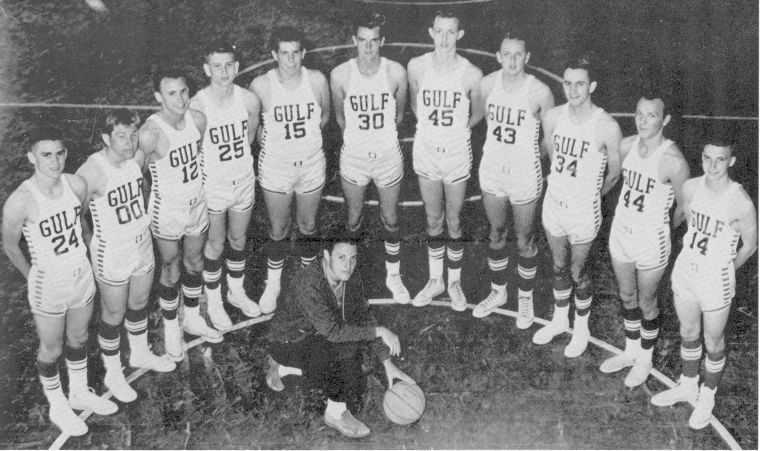
After an unscientific image search on Google, I found that the most common pose was the front-facing two-row, though this also had its one-row, three-row, and four-row variants. The single-row could also be performed in profile.


More interesting poses (most from olden times) included "the indian-style" "the circle", "the semi-circle", the "I for Idaho", "the streetclothes", "the lunch line" and "the stairstep".


Finally, John Ibson in "Picturing Men" argues that displays of male affection in team photos have become more taboo over the course of the twentieth century. As examples, he provides "the bicep clutch" and "the pile" from the turn of the century.

Fundamentals: Old-timer basketball camps


One day I asked Jeff if he thought it was possible for somebody my age to improve his game. "Definitely", he said. But I'd hit a plateau. I was playing and shooting regularly, but nothing really changed.

I showed him my one move--catching the ball on the wing then looping around the man guarding the point and down the lane. He showed me a couple of variations on the move including one that involved going to my left. When I confessed I didn't have a very strong left hand (he feigned surprise, but was probably just being polite), he suggested that I dribble with two balls every day.

It sounded like a great idea, but I've never done it. I'm just not the type of person to do drills of my own volition. Which is why adult basketball camps have caught my eye. There are some crazy expensive fantasy ones--including those by Darryl Dawkins, Coach K, Rick Barry, and Michael Jordan ($15,000; see the story in Sports Illustrated), but perhaps, the more promising (and less expensive) one for me is Never Too Late Basketball (see the story in the NY Times). They have ten-week courses in Boston, San Francisco and New York for $175. They also do weekend camps around the country.

Wednesday, January 25, 2006

Courts: Can you feel the vibe?

Lately, the outdoor basketball scene in Berkeley has been really crappy. Since I'm a total hoops addict, I'll go out searching for a game and basically settle for anything. Which has got me thinking about courts' different vibes.

I went to Live Oak the other night with Pete and the Ivory Tower. We ended up playing three-on-three with a group of Live Oak regulars. There wasn't anyone there who could match the Ivory Tower's height (6'6"), so we won a whole bunch of games in a row. That's not the point. I just wanted it to be noted for the record. The point: Before one of the games, this dude looks right at me and says "Were you talking shit about me?"

I was not.

I say, "Um, no." He says, "Don't be talking shit about me" -- still glaring. Now I'm freaking out. He's there with about ten of his friends, and I am certain that they wouldn't think twice about beating my ass, or at least threatening to, which for me is worse.

So I decided to go and smooth things over. I sat right next to him, looked him straight in the eye and said "I swear to God, we were not saying anything about you. Your boys know me (they did), and they know I just come here to play ball and I don't start any trouble." After the longest second of my life, he goes "Ok man, cool." Needless to say, I was really really relieved.

But what the hell? Why did I have to deal with that? I feel like I'm always having trouble there -- see "A bully made me feel bad." That court has a BAD VIBE. I'm saying it. It's true. Guys play high and drunk. Guys are always griping and posturing, trying to one-up each other. Now this isn't true all the time. I've played in some really fun games there. But too often, something dumb happens and I end up feeling crummy. I was glad that I could defuse the situation with Stop Talking Shit About Me Guy, but it was embarassing to have to go over to him in front of all his friends, including some girls.
Conversely, Pete and I had a really nice run over at Ohlone last night. We played competitive games with friendly guys, and we all talked to one another between games. We didn't bicker about the score and there were barely any fouls called or committed. (Plus, Pete and I went undefeated.) I rarely have a bad time at Ohlone, except when no one is there. There was even one time when I was shooting by myself at 11PM and a cop pulled up beside the court and told me I had to go home. But I didn't mind because he was so nice about it, almost apologetic. Now that's a court with a good vibe!

Am I just too much of a wuss about this? When I bring this stuff up with other pickup players I meet, I often get blank stares in return, or vague uh-huhs. Guys always want to talk about how good the skills are, how tough the run is. I just want to talk about how much fun I had or didn't have and if I liked the other players. Maybe I'm getting old, or maybe I'm finally becoming a woman.

Friends of Setshot: Tell me that you think about these things too.


Sunday, January 22, 2006

Could you score on an NBA player? A quasi-empirical test


A few months ago I wrote a post wondering whether an ordinary pickup basketball player could score against an NBA player if the pro was playing his absolute hardest. This post generated a fair amount of conversation, with most respondents thinking that they could not score.

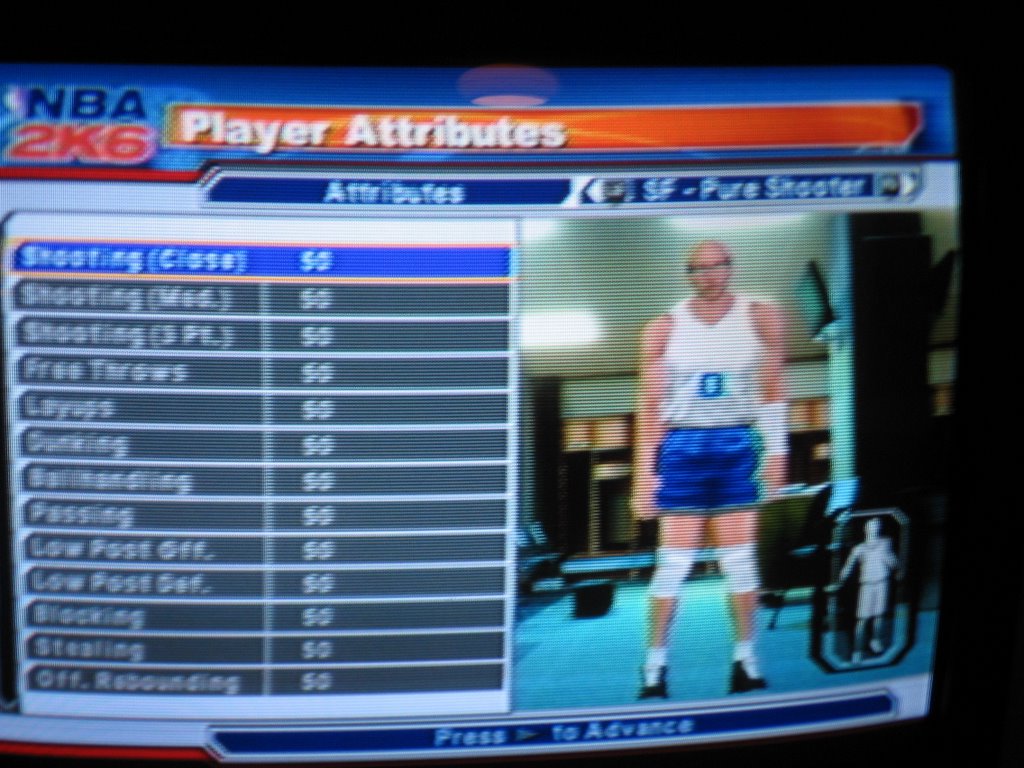
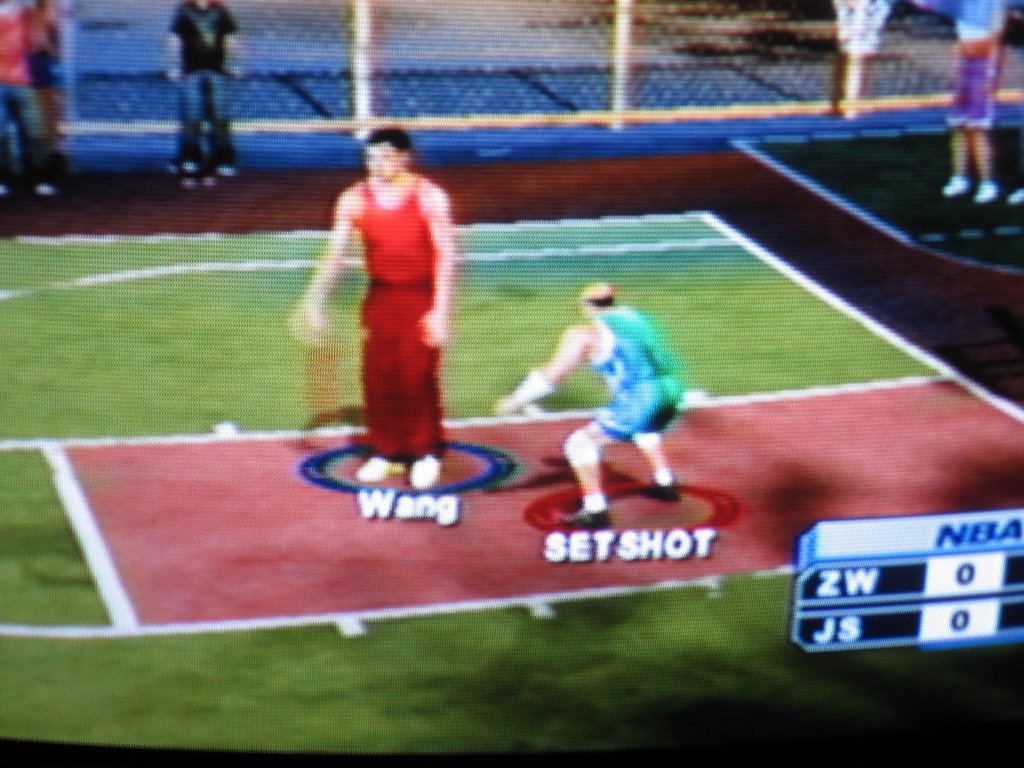
Cary and I decided to explore this issue using the latest in basketball simulation technology: NBA2K6 for Playstation 2. We created a character called Joe Setshot -- a 5'8" small forward with knee pads, Stockton shorts and male pattern baldness. Setshot was given the lowest possible rating in every skill category (50), so as to best approximate the abilities of an average player.

Cary and I then conducted a totally unscientific test of the "Could you score?" hypothesis. We made Joe Setshot play one-on-one against three NBA players: Wang ZhiZhi, Paul Shirley, and Kobe Bryant, alternating users in an attempt to control for video gaming skill. Would our man be able to get a bucket? Results after the jump.

The first match was Setshot versus Wang ZhiZhi, whose player rating of 63 is among the lowest in NBA2K6. We played winners' outs. Results, with user in parentheses:

Wang (Jeff) 15, Setshot (Cary) 0

Wang (Cary) 15, Setshot (Jeff) 1

It was impossible for our man to stop Wang. The pro was too strong and too fast. As soon as Wang got the ball and started moving toward the hoop, Setshot would be bumped backwards until he was forced out of position, and the towering Chinaman would lay it in. I did manage to score one point during my turn as Setshot, but this happened because Cary/Wang turned his back on defense and I was able to get an open layup. It's important to note here that I have owned this game for about a month, and while Cary is an experienced video hoops player, it was his first time playing this particular game on this particular system. Even with this skill disparity, the match was obviously quite lopsided.

Our second series put Setshot against Paul Shirley, who is the lowest rated player in the game (53). Results:

Shirley (Jeff) 15, Setshot (Cary) 0

Shirley (Cary) 15, Setshot (Jeff) 4

Again, Setshot was completely unable to stop Shirley, with the pro hitting a variety of layups and short jumpers to control the game. However, Cary got distracted for a minute and I was able to score four points in succession during my turn as Setshot. As soon as Cary pulled it together though, Setshot was shut down and Shirley cruised to victory. Remember again that this was Cary's first time playing the game.

Finally, just for fun, we made Setshot play against an NBA star, choosing Kobe Bryant. Results:

Bryant (Jeff) 15, Setshot (Cary) 0

Bryant (Cary) 15, Setshot (Jeff) 4

As Bryant, Cary went into a Non-Persistent Vegetative State and allowed me to score four times in a row, but basically, it was all Kobe. He threw down an array of awesome dunks -- their sheer force often knocking our man clear off the court. Bryant also hit a variety of difficult jumpers and fadeaways, taking great pleasure in toying with his lesser opponent. Hilariously, the game's AI made Setshot talk trash throughout the contest, even asking "Is that all you got?" as Bryant flushed the game-winning dunk in his face.

So what can we conclude from this? I think the experiment was slightly corrupted by a discrepancy in user skill that allowed me to score a few times as Setshot. However, in general, it seemed clear that with the pro user defending competently, it was impossible for Setshot to get a clean shot off. And as soon as the pro got possession, the game was over. Furthermore, the Joe Setshot character was probably significantly better than the average pickup player. We set his skill level at the bare minimum, but my impression was that the average player would still be much worse. (Note to video game companies: Let the skill ratings go down to zero.)

I'll stand by my assertion that the typical pickup baller could not score on a pro if the pro was playing his hardest. However, I invite others to improve on our methodological design and contribute to this important area of scholarship.


Wednesday, January 18, 2006

Culture: Hoops Hits


The other day I was hooked up to my ipod and doing the elliptical trainer dance at the local Y when endorphins caused me to wonder what the best basketball songs are. The only songs that came to mind were the Michigan State fight song and Spearhead's "Why O Why" from Chocolate Supa Highway. I always liked that song because one line made me imagine that it was about Bergen St. in downtown Brooklyn where a bunch of us used to play--"all day to be more specific, east to west from Atlantic to Pacific". I just found out that Michael Franti (who is 6'6") played for the University of San Francisco Dons. I'd like to see him take on Prince. Other favorite songs?


Why O Why
I say my prayers every morning just like orange juice
I crack the crinkles out my body till I'm feeling loose
I strap my sneakers on my feet like they was combat boots
they fit my feet like Cinderella when I'm shooting hoops
Why oh why do memories keep chasing me
sometimes it makes me wanna grab my shit and flee
sometimes I wanna blow my brains to put my life at ease
but I ain't clocking out I gotta see the seven seas
please seven's a very lucky number for me
that was the age when I discovered how good balling could be
up every morning with the birdies doing little drills go to my
left go
to my right developing mad skills
how could a love for this game bring so much sadness
I played with brothas with so much badness
but now they gone I sing a song
pop a three from the top of the key in they memory

(Chorus)
Why oh Why do memories be chasing me
sometimes it makes me wanna grab my shit and flee
even in seasons when it's another color sport
I still be memorizing lines out on the basketball court
singing Why oh Why do memories be chasing me
sometimes it makes me wanna grab my shit and flee
even in seasons when it's another color sport
I be remembering my partners on the basketball court

Do you remember runnin' the court in September
me and my homies be down for whoever
would come along and try to send us to the showers
from the game that we'd been dominating' there for hours
all day to be more specific
east to west from Atlantic to Pacific
fools would come round to get down
and try to take our crown
but we would hold our ground and we would never back down
old timers new timers would get in line there
and take a seat there and try to prepare
but oh no! there was no chance when we was in the zone
we was alone at the top we had hops we got props
and when we needed to we busted chops
wipe the court with your game like we was using mops
whatever happened to the super hoopers
in the park I reminisce while shootin' solitary after dark

(Chorus)

Brother C came fresh from out of town and
he had handles and like McDonald's he could clown ya
dribbling baby bounces between drinking forty ounces
knock ya on your heels and do circles like he was Curly Neal
but oh no, the liquor got quicker to his head and he said
"I think I musta placed some stupid bets"
he hit me up for some cash there was a car crash
a splash and then the brother made a mad dash
Rob oh Rob his whole life was like a roller coaster
but on the court he looked like a Dr. J poster
flying high with an Afro blowing in the wind
wiping Windex, index finger rolls
off the glass then swish through the net
jump a Corvette with a triple pirouette
but off the court he had a few temptations
copulations no moderations by 24 he had 3 pregnations
last check crack intoxications
so many other brothers gone from this dimension
and none of those who got hurt receive a pension
give a Bup! Bup! to those locked up in detention
memories too many dimension
and we say, one more time...one more time

(Chorus)

Friday, January 13, 2006

New contributors!


Well, Old School and I have been pretty bad about posting lately. I think that this has in part been due to life responsibilities (our jobs, Old School's baby boy, my upcoming nuptuals), and also due to injuries that have been keeping us off the court (Old School: knee, me: ankle).

So we've invited some of our most devoted commenters to write posts for the site. Please welcome Cary, Juice and Mothy to our editorial ranks. Ben has also been added, though he is not sure if he will post. Let's hope he does!

Cary (aka DJ Cary aka the Kuma) grew up on the mean streets of St. Louis Park Minnesota, where he spent nights perfecting his behind the back pass, slow crossover dribble, and left-handed fade away jumpshot on the hallowed grounds of the Minneapolis JCC and his neighbor Barry Miller’s slightly bent garage door hoop. Rumor has it that his vertical exceeded 23 centimeters on occasion, and that he could school anyone in the ‘hood in Double Dribble. Taking his game to the streets of New York City, he quickly became a playground legend at storied courts like Bergen St. in Brooklyn, the low-ceilinged and high-flying Hamilton Madison House in Chinatown, Cardinal Spellman High School, and the 2nd Avenue courts on Manhattan’s Lower East Side, where he dominated the B-court filled with hung-over hipsters wearing knee high tube socks and vintage T-shirts for years. In 2004, Mayor Michael Bloomberg officially renamed the bench on the east side of the 2nd Avenue courts the “DJ Cary Honorary Bench” to pay tribute to his many hours spent hacking playground greats like Jeff, Juice and Ben.

Juice began playing basketball regularly at the ripe old age of 18, on the hallowed concrete courts of the University of Wisconsin's southeast dorms. He became known as "Whiplash," thanks to the frequent snapping back of his neck as he watched his two-handed, from-the-chest jump shots get swatted into the next ZIP code. This indignity led him to develop a one-handed jump shot ranked between Shawn Marion's and Patrick Ewing's in Slam magazine's annual "100 Ugliest Jump Shots" poll. Juice now resides in Brooklyn, New York, where he silently watches teens on the local courts fly through the air with grace and skill while a lone tear descends his cheek, pauses at his chin, and plummets, like his hoops-playing dreams, to the ground below.

Mothy (aka Vanilla Blur aka Vanilla Blob) grew up a Hoosier by birth, but a Wildcat Fan by the Grace of God. Embarrassed by his self-perceived boney knees in early childhood, he tried to conceal them behind thigh-high tube socks kept up with flooring-installer knee-pads through his 21st birthday. His dry wit rubbed his high school coaches the wrong way, and his hoops handle did not flower until his matriculation at UCONN where his intramural claim-to-fame was hanging on the rim at any and every opportunity. Just prior to his marriage to a track jock(tress)
in 1997, Mothy breakaway dunked twice in a game on a [springy] second-storey Methodist church court in Fort Worth, Texas. Post-marriage, he is 0-for-397 on breakaway dunks, but his wily game and deceptive, flat-footed defensive posture was a staple at the University of Texas and on Austin's Pease Park and Fire Station Courts through 2001, before he relocated his Church of the Hardwood to NC State University. After adding another $65K in education debt to his kitty in North Carolina, Mothy recently moved his Hoops Congregation to Manchester, New Hampshire, where the jury is still out on how well hoops can be played with parkas, moon boots, and lumbering meese (?).

Thursday, January 12, 2006

Psychology: The Like That Dare Not Speak Its Name

In the interest of full disclosure, I have to confess that I am not a fan of the Duke Blue Devils. I suppose it is a natural byproduct of having a father who graduated from the University of Kentucky, and of my own matriculation at UCONN, Texas, and, most recently, NC State. My background surely helped to foster a deep dislike of Durham, North Carolina's most famous collegiate sports denizens, that and Dick Vitale's incessant shilling for the Blue Devils, to be sure.

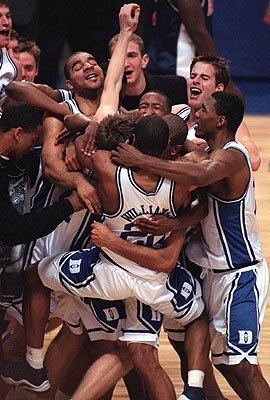
One thing that I've noticed about Duke basketball players through the years (apart from their maddening youth-be-damned confidence, and the way they normally cream teams they're supposed to cream), is the way they seem to cling to each other during lulls in the action.

While you may assume I'm looking to shock readers with allusions of a "Brokeback Basketball" bent, I assure you I'm not. I'm just wondering if all the hugging, the hands resting on necks and shoulders, the fanny slapping, and other signs of physical intimacy during basketball games among teammates (especially Duke teammates, it seems) are nothing more than indicators of players' absolute acceptance of each other on the hardwood. I watch my beloved Kentucky Wildcats play and it seems like they're playing by strictly Victorian rules of physical contact. Could the answer to their current hoops woes be settled by some simple Magic-on-Isiah Thomas lip-to-cheek action? Is there something to this close-contact among teammates that signals total buy-in to the team concept?

Friday, December 23, 2005

Race: CBA KKK

Devoted reader, former roommate, and all around smart dude Ben sent us an interesting article about Gonzaga basketball phenom Adam Morrison. For those out of the loop, Morrison is a 6-8 white guy who idolizes Larry Bird. The thrust of this article, found in Slate, is that almost every promising white player is compared to Larry Bird at some point, which is both unfair to them and to Bird. A great quote:

"Want proof that getting compared to Bird is a one-way ticket to the Caucasian basketball graveyard? A list of players who've been identified as Bird-like reads like the roster of a CBA team sponsored by the KKK."

When we started Setshot, Old School and I talked a lot about taking on the issue of race -- particularly as it pertained to pickup hoops. But we could never figure out a way to address it concisely and originally. The issue is just too big, too complicated, too scary -- and many writers have already produced intelligent, cogent commentaries (for example, Frey, Shields, Wideman; see "Best Hoops Reading").

I think that our only hope here is to address race in little tiny stabs. I'll devote a future post to my experiences as an Asian pickup player, but for now, let's talk about Morrison, Bird, and the World of Whites. I think that the Slate article is provocative, but the argument's not water-tight. Yes, white guys have traditionally been compared to Bird, but this is changing fast as new and different forms of whiteness have emerged in basketball (Nash, Ginobili, D.I.R.K.) Also, because Morrison himself claims to idolize Bird, saying that it's unfair to compare the two is itself a bit unfair. That said, race is race, and there will probably always be an "apples to apples" temptation among sports commentators and pundits. When the NBA is full of Asians, will they all be compared to Yao? "You know Bill, that Chang reminds me a lot of Yao Ming. And only eleven inches shorter! The resemblence . . . is . . . remarkable."

The Slate article talks about the Gonzaga-Oklahoma State game in which Morrison hit a bank three at the buzzer to win it, focusing on the announcers' incessant Morrison-Bird comparisons, but it fails to mention another interesting exchange that I caught between CBS commentators Bill Raftery and Gus Johnson. Early in the game, they were discussing the Bird-Morrison thing, and Raftery said something to the effect of: "Morrison actually reminds me of another player: Kiki Vandeweghe." Johnson, clearly aware (at least to me) that they had only compared Morrison to white players, hastily added "Or Reggie Miller! Or Rip Hamilton!"

So I don't even know what the point of all this is. I guess only that the issue of race in sports is sensitive, but also complicated. Setshotters: Help me understand white people.


Sunday, December 11, 2005

Careers: When to retire? Part II


For the last month or so, I haven’t been in the mood to post on Setshot. I’ve been too worried about my knee. In mid-October, I played in the most intense game since my return from ACL surgery three years ago. Not only was the game tough, but I was overmatched, and to make matters worse, my wife happened along--compelling me to exert myself well beyond my capacities. It turns out she wasn’t even watching. It seems they never are (see Girls Ain't Nothin' But Trouble).

After the game, my knee hurt differently than it ever had before and was a little numb. The pain didn’t go away for weeks. I made an appointment with the doctor and joined the injured list. Retirement seemed imminent.

Every other night, I sat down at the computer to write a new post, but I couldn’t do it. Jeff wrote posts about trash talking and scoring on an NBA player and old man moves, but I just couldn’t match him. I wrote a few posts about stuff I found on the web, but I couldn’t bring myself to write anything personal. Jeff suggested I write about being injured, but I just couldn’t face it. Part of it was that I wasn’t having many hoops experiences in my street clothes. But most of it was that it just made me too damn depressed. Could it really be over?

Earlier, I had hoped that Setshot might be a place that both current players and retirees could enjoy, but if I was typical, retirees would avoid the site like the plague.

This week, I finally got to the doctor. He told me it wasn’t my ACL, but probably just a meniscus problem. He advised against surgery because the meniscus is serving a purpose. Instead, I should just play with the pain (which really is quite minor) and keep building up my quads.

I could have kissed him. He saw how happy I was and said “Keep on playing. Keep on playing. It’s good for you. We’ll work through this.”

"I play too,” he said with a grin. I immediately told him all about Setshot.

“I’m 58”, he said. “I’m always the old man of the court. But I can shoot a hook with either hand and nobody can stop me.”

If you’re reading, Dr. Old Man of the Court, thank you very much. Jeff just e-mailed about a regular run at Strawberry Creek Park. The guys are at our skill level (me, moderate-to-bad; Jeff, awesome) and “more importantly, they seem like polite and considerate young men.” I’m so ready.

Tuesday, December 06, 2005

Psychology: What's the worst that can happen?

In addition to increasing physical discomfort, we aging ballers must deal with another type of pain: shame. We are ashamed that we're not as good as we used to be. We are ashamed that our shorts are too short. We are ashamed of our 1987-model Reebok Pumps. We are ashamed to leave the court and go back to our "jobs." Most of all, we are ashamed that youngsters break our ankles, dunk on us and block our shots and then cheer wildly about it. Don't they know that if they played us when we were in our prime, we'd be the ones breaking ankles, dunking (ok, slapping the backboard) and blocking (ok, contesting)?

I read somewhere (Reader's Digest?) that the best way to deal with shame is to bring it out into the open. So let's share our most shameful moments. It'll be fun -- promise!

The worst one for me was missing a two-foot layup at the buzzer to lose a league game in New York. We were down one with a few seconds to go. The final play was not called for me, but our guy missed the shot, and by pure dumb luck, the rebound fell right into my hands directly under the basket. I didn't know how much time we had, panicked, and BRICKED it from point blank range. We actually won the league championship that season, but the game I choked was the only one we lost. I don't remember too many details from the season, but that moment is forever burned into my memory. Oh, did I mention that my girlfriend was at the game?

Another shameful moment was getting alley-oop dunked on to lose a pickup game. I think that it was game point both ways (i.e., next basket wins). I was guarding someone much bigger than me. All I remember is losing my man for literally a second, turning around and seeing him way up in the air, and then hearing the awful sound of a game-winning dunk. I was basically under the basket, which meant that I had gotten posterized in the final, climactic moment.

Alright, that was less fun than I thought. But since I wrote it, I''ll post it. What are you ashamed of?


Friday, November 25, 2005

Style: Best hoops haircuts


We tend to take our hair for granted when we're young. We can do whatever we want with it. Grow it long. Shave it off. Shave some of it off. But aging takes its toll on our coiffability. Many of us start losing our hair. We go gray. Our fine, gleaming locks become bristly and stiff.

So while we still have some left, let's talk about the coolest hoops hairstyles. My favorite ever was on an asian kid I used to play with in Boston. His hair was cut marine-short all over, except for his bangs, which grew down to his chin. This wouldn't have been that remarkable except that he always rebounded one-handed, which made his bangs fly all over the place in a really neat way. I attempted this hairstyle myself for a while, but my head is too oval and I looked stupid. Plus, I rebound with two hands.

There was another white guy I knew who had a big curly afro. Again, no big deal, except that he always came to the gym in a full 1970s-style Lakers uniform, complete with short shorts and striped socks. This dude looked like he'd been time-warped straight from Walt Frazier's corporate basketball camp. He even played like he was from the 70s, with a straight up-and-down dribble and a two-handed quasi-set shot. And, he was awesome!

Setshotters: Share your favorite hairstyles here.

Sunday, November 20, 2005

Tips: What would Jesus do?


The crazy kids of Global Mission Church in Silver Spring, Maryland suggest another way of improving your vertical jump.

Click "more" for comments only.

Tips: The ultimate trick shot

Check out the "ultimate trick shot". Pretty tricky!

Tuesday, November 15, 2005

Equipment: Jeff's ankle brace review


My name is Jeff. I'm 31 years old. I look like I'm 16. I have the ankles of an 80-year-old.

My ankles have been brittle for as long as I can remember. I started rolling and spraining them as a teenager, and experienced a series of horrific injuries in my twenties. In 2003, I had a really bad one that put me on crutches for six weeks and kept me off the court for months. My doctor made me get an MRI. When we looked at it, he pointed out that one of the ligaments in my ankle had been completely torn away. My poor ligament won't ever grow back, and at some point, I will have to have surgery.

I had to start wearing ankle braces to play basketball about eight years ago. Over time, I've experimented with a few different styles and brands, and I will share my thoughts here.

1. Ace bandage. This is what the doctor/trainer wraps your ankle in immediately after a minor injury. It provides minimal support and will not prevent most ankle rolls. Don't try playing in this.

2. Standard neoprene ankle brace. If you have a very minor injury, this could do. However, for someone with ankles as bad as mine, this might as well be wax paper. When my ankles see one of these, they laugh and laugh.

3. Aircast. This is a serious piece of equipment, but it's not really for playing in. It's for walking around while your ankle is healing. If you try to play in one of these, your ankle will be protected from injury, but you will only be able to run at half speed, and turning will not really be an option. It should be called "The Mutombo."

4. Basic lace-up ankle brace. This is a good, affordable option. The brace has laces in the front, which can be tightened and loosened as needed, and there is usually some sort of lightweight wiring embedded in the side for additional support. It takes a while to get used to wearing this type of brace, but once you are accustomed to it, it feels like an old (but smelly) friend.
Lace-ups will prevent most injuries, but not all. My ligament-shredding ankleplosion happened in one of these.

5. Lace-up brace with inserts. This is one step up from the lace-up brace, and what I currently play in. I actually remove the inserts because they are uncomfortable, but these braces are still tougher than the standard lace-ups. I've never had a serious injury in one of these. McDavid and Tru Fit are good brands.

Setshotters: Share your experiences with ankle support here. Also feel free to contribute reviews of knee, shoulder, elbow, wrist and face supports. We'll start another thread for "best steroids," so hold off on that for now.

Monday, November 14, 2005

NBA: Paul Shirley on retirement


Former NBA benchwarmer Paul Shirley writes a fantastic blog about the life of an ordinary NBA basketball player. He is articulate, funny and honest. Today's entry is particularly relevant to Setshot, as it's about the prospect of retirement. He says that he idolizes Mark Pope, who retired this year without apparent regret, and plans to enter medical school.

Shirley got some attention last year with his "Road Ramblings" blog -- in which he wrote about being bored in practice, being bored on the bench, being bored on the road, and liking girls a lot. He tagged himself as an "embedded journalist," and was recently rewarded with a book deal from Random House.


Thursday, November 10, 2005

Players: A 52-year-old college basketball player!

Here's a recent story from the Detroit Free Press to inspire us all. Maybe this guy can be Setshot's official spokesman.

Aging rookie gives college players run for their money

IRONWOOD, Mich. (AP) -- Gogebic Community College basketball players have a new incentive not to break team rules or skip practices: They might get benched in favor of a 52-year-old man.

Russ Maki, who is studying criminal justice at the Western Upper Peninsula school, has earned a spot on the roster as a walk-on.

"It's been a great experience, bonding with these younger guys," Maki told the Daily Globe for a story this week. He made a brief appearance in the Samsons' opening game Tuesday night but didn't score.

A long-ago member of the Wakefield High School squad, Maki played last year on a city league team with the Gogebic assistant coach, who encouraged him to try out. The head coach, Deke Routheaux, gave the OK.

"I was a little surprised he was willing to do this," Routheaux said Wednesday, adding that Maki was in "great shape."

There was one problem: Maki, who runs an insurance company, didn't attend Gogebic. So he enrolled as a full-time criminal justice major.

"Well, if the insurance business goes bad, I guess I can be a cop," he joked.

After working out with the team for a week, he decided he could keep up with the other guys and stuck with it, scoring nine points in a recent scrimmage.

Maki's life is hectic nowadays. Classes start at 8 a.m. He works at the insurance agency from noon until basketball practice, which ends at 5 p.m. Then he does homework and lifts weights for an hour.

He also squeezes in time for his wife and two daughters.

"It'd be nice to have 36 hours a day," he said.

Routheaux is noncommittal about playing time for Maki, but says he's a valuable addition to the team.

"He's an inspiration for the other players to work hard and be on time," Routheaux said. "They respect what he's doing and he fits in well with these guys, doing the little things right, playing hard. If he can get up at 6:30 in the morning, they shouldn't whine about it."

Maki said he shows up 30 to 45 minutes early for practice and tries to hustle during all the drills.

"I do it to show I can do it, and it seems like the players kind of follow suit," he said.


Monday, November 07, 2005

Psychology: Who do you think you are?

With the NBA season underway, I thought that it would be a good time to raise a topic that Cary had recently suggested. The question is: Do you ever imagine yourself as a pro basketball player, and if so, who do you imagine yourself as?

Nowadays, I don't really ever imagine myself as anyone else, but I often imagine that I am a better version of myself. The weather has been getting "bad" here in Berk
eley of late, so there have been quite a few nights of lonely foul shooting at Ohlone Park. The imagination runs wild. Jeff can dunk! Jeff is breaking ankles! Jeff pins that weak shit against the glass!

When I was a teenager, there were two pro basketball players that I liked to think of myself as. The first was John Stockton. Being small, I had to learn to play PG, and soon fell in love with passing. Stockton was an obvious role model at that time. NBA highlight shows would play reel after reel of "STOCKTON TO MALONE!" and I liked to think of myself finding all those tiny passing lanes and fooling all the big guys with my lookaways.

However, PG is not my natural position. My natural position is center. When I first started playing, I had no handle and no range, but I could jump really high and had good timing, so I got lots of rebounds and bloc
ked a ton of shots for someone my size. In pickup games, I'd go down low and pretend that I was Patrick Ewing. I remember seeing tape of that Georgetown game where Ewing goaltended all those shots and thinking that it was so cool, so intimidating, that blocking shots became my favorite thing in basketball. And believe me, when a little skinny asian kid blocks your shot, you're gonna hear about it.

I even taught my baby sister a bunch of big man trash talk. I'd take her to the park when I had to babysit, and she became a sort of mascot there. During shootarounds, I'd bring her onto the court and hold the ball in front of her. I taught her to slap the ball out of my hands and say "Get outta my house!" or simply "Ewing!" in her squeaky little voice. So cute. Actually, the cutest thing was when she would say "money" as she shot the ball, it went about two feet in the air, and rolled to the sideline.

Ok Setshotters, who are your NBA role models? Anyone who says Kobe Bryant gets a free trip to Guantanamo Bay.


Friday, November 04, 2005

Tips: Best hoops reading

As we get older and less able to play, we have to find different ways to stay engaged with the game. I'm always looking for good basketball books, so I thought I'd start a thread where folks can post up their favorites. Here are some of mine.

1. My favorite basketball book ever is Playing for Keeps by David Halberstam, which is about Michael Jordan. Halberstam is a big-time historian, and he provides a fantastic level of detail. The running theme of Playing for Keeps is that the cause, and price, of Jordan's success was basically a pathological need to win. This is not news, but there are some great stories around this theme, like when Jordan cheats at a game of Old Maid with his college roommate and his roommate's grandma. ("Did you just cheat my grandma in Old Maid?") The sections about Larry Bird and Isiah Thomas are also really fun to read.

2. Another good one is The Last Shot by Darcy Frey. This one follows the Lincoln High (Coney Island) basketball team around in the early 1990s, and focuses on the twisted process of college recruiting. A bratty 14-year old Stephon Marbury makes some extended cameo appearances, the first of which has him rolling into Coney Island's famous "Garden" basketball court on a Big Wheel.

3. I also loved The Last Season by Phil Jackson, mostly for the Kobe-Shaq gossip. Jackson does his best to handle the Bryant sex scandal delicately, but in reading between the lines, it looks to me like Jackson's saying: "I think Kobe raped her."

4. I'm right in the middle of The Jump by Ian O'Connor -- the new one about Sebastian Telfair. Telfair gets treated pretty gently (this is the price of total access), but the high school/NCAA/NBA exploitation machine does not. Some good Marbury-bashing in this one as well. I find it riveting.

Ok Setshotters, share and review your favorite books here!


Wednesday, November 02, 2005

Tips: How to shoot a set shot


We named this site "setshot" to reflect the repertoire of the player that's just too old and broken down to jump or drive the lane anymore. For me, the name also conjures up my dad and his old-fashioned moves. And that conjures up an era when the set shot dominated basketball. Jeff and I don't go back that far, of course, (we're aging, not old) but the game has changed in many ways since our childhood. So, to celebrate our diminishing abilities and our years of hoops love, I offer you a mini-clinic on the set shot.

In seventh grade, I felt honored when my coach chose me to read an article on the set shot by Pistol Pete Maravich and then teach my fellow players how to do it. I only realized later that this was his subtle way of correcting my unorthodox elbow-akimbo shooting style.
An inspiration to aging hoopsters, Maravich died on the court at age 40. After, a pick up game with Focus on the Family's James Dobson, he said, "Let's do this again, I feel great." He then collapsed and died of a heart attack.


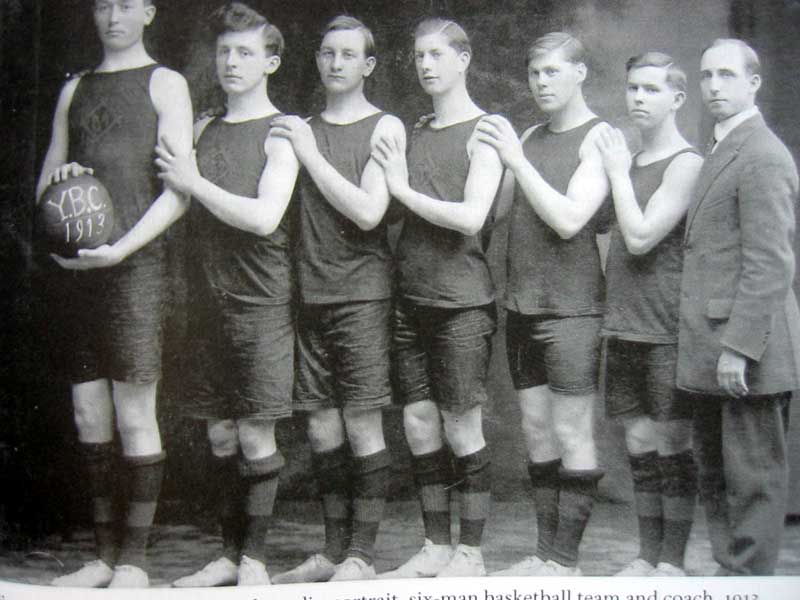
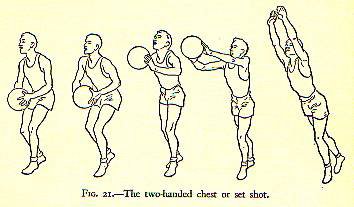
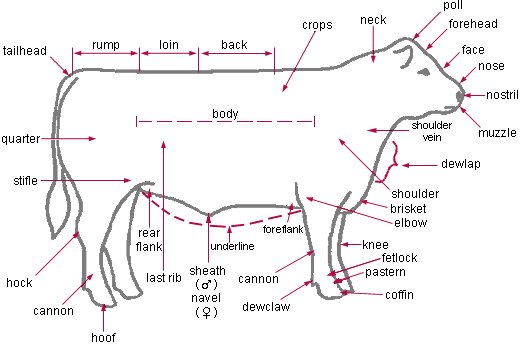
Back to the set shot, first, don't shoot like the old-timer at the top of the page--his form looks terrible--he's shooting with both hands and leaning forward crazily as he takes the shot. Second, you could try the BEEF method. Jason Rogers suggests that the coach should have some beef on hand for the lesson "or something that looks like beef (a large picture of a cow would be a good prop!)". After showing the prop, the coach should initiate a discussion about beef. "Ask students if they think that "beef" has anything to do with basketball? Anything to do with shooting a set shot? (The answer should be "no")." The coach then asks the students to list all the elements of a good set shot on the bulletin board. The coach then singles out the four responses that spell BEEF--Balance, Eyes, Elbow, and Follow-through. If only my coach had brought some beef to the gym--my stomach wouldn't have grumbled so much during wind sprints and I'd hold the NBA three-point title--though three-pointers didn't exist back then.

Coaches Clipboard has a very good page on the set shot. I especially like the Form Shooting drill that they show in the video clip.
Start with shots directly in front of the basket, just a few feet away, to develop correct technique. Shooting further away does not allow the shooter to focus on this repeatable form. Do this drill for just 5 minutes every day. Even experienced good shooters who are going through a "shooting slump" find this drill helpful in restoring their shooting mechanics and confidence.


Finally, 81-year-old Ken Lindsay's excellent Guide to Coaching Basketball also has a good page on shots of all types (and many other things), including the two-handed set shot--"This shot is hardly used by modern-day players; however, Bob McDermott, the best shooter I ever saw used it with great success. Therefore, it is described here because I feel it is the most accurate shot from long range." McDermott, who played in the 1930s and 1940s with the Fort Wayne Zollner Pistons, could hit reliably from anywhere inside half court--a skill he used to spread the zone offenses of his time. The one-handed set shot and the running one-handed shot were invented around the same time by Hank Luisetti of Stanford and then the Phillips 66ers and St. Mary’s Pre-Flight of the AAU (the ubiquity of the set shot evidently prevented them from calling themselves "Air" anything). Luisetti was named the second best player of the first half century behind George Mikan.